L
O
A
D
I
N
G


Zoho, Odoo, ERPNext, Dynamics 365 and custom ERP, delivered by one accountable team.

A successful ERP rollout is a joint effort. Here is how we share roles, decisions and risks with your team from the first workshop to the end of hypercare.
An ERP implementation partner in the UAE should run the project on a written methodology with clear roles on both sides. A typical method has six stages, mobilise, design, build, test, deploy and hypercare, each with entry and exit criteria, named owners and sign-off. The client owns business decisions and data, while the partner owns solution design, configuration and the project plan.
Software features are similar across the main platforms. What differs is the way a project is governed: who decides, who tests, who signs off, and what happens when a risk turns into an issue. As an ERP implementation partner UAE companies rely on for Zoho, Odoo, ERPNext and Microsoft Dynamics 365, we run every rollout on a written methodology with clear roles on both sides.
That methodology covers six stages: mobilize, design, build, test, deploy and hypercare. Each stage has entry and exit criteria, named owners and a sign-off. Your team owns business decisions and data. We own solution design, configuration, development and the project plan. Shared work, such as user acceptance testing and cutover, is spelled out in a RACI matrix agreed at kickoff.
This page is about that partnership model. If you are still comparing firms, our guide to choosing an ERP partner and the ERP implementation services page cover the broader picture. We are based in Dubai and deliver on-site and remotely across all seven emirates.
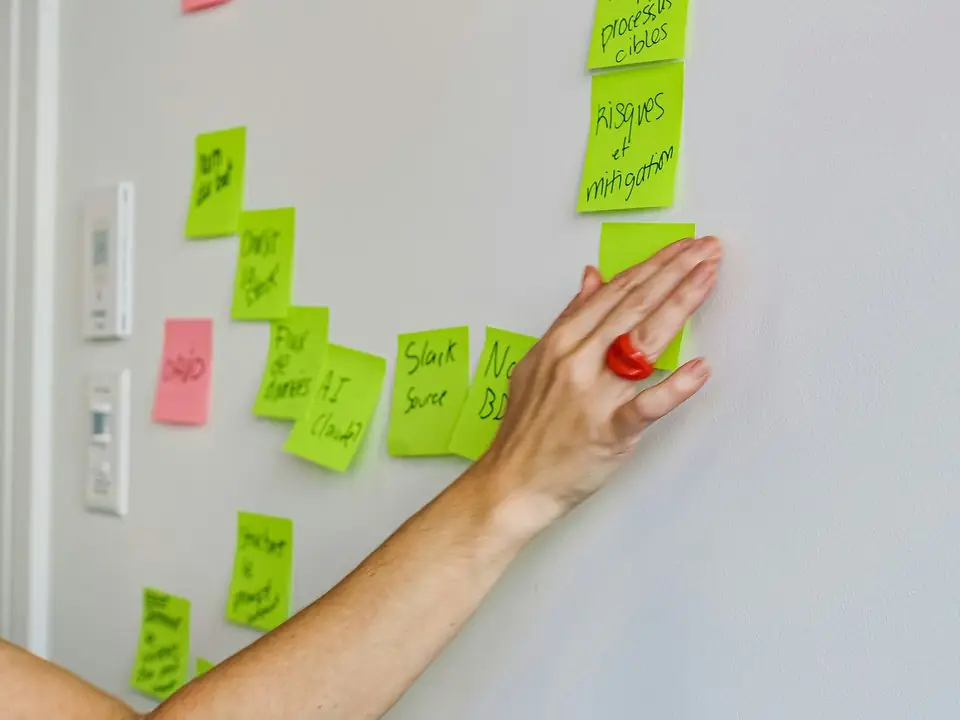
Most failed ERP projects in the UAE do not fail on technology. They fail on unclear ownership and late decisions.
Design questions wait for a busy managing director, and the partner fills the gap with assumptions. Rework follows when those assumptions are rejected at testing.
Finance and warehouse leads are added to the project on top of their daily jobs. Testing gets squeezed and problems reach production.
New requests arrive by WhatsApp and are built quietly. The budget and timeline drift without anyone formally agreeing.
Opening balances, customer masters and stock counts are cleaned too late. Go-live slips or happens with figures nobody trusts.
Support moves to a ticket queue on day one, with no named consultant who knows the design. Small issues pile up in the first month-end close.
These structures cost little to set up and save a lot of friction later.
Sponsor, finance head, our engagement lead and the project managers meet at each stage gate, or more often on larger rollouts, to approve scope, budget and go or no-go decisions.
Every activity, from chart of accounts design to cutover, has one accountable owner. Responsible, consulted and informed roles are listed for both teams.
Each new request gets an impact note on cost, time and risk. It is approved, deferred to a later phase or declined, in writing.
Risks have a likelihood, impact, owner and mitigation. Issues have a due date. The log is reviewed weekly and summarized for the steering committee.
Design, build, test and deploy each end with a formal sign-off against agreed criteria, so nobody moves forward on hope.
The consultants who built your system stay on for hypercare, so first-month issues are fixed by people who understand the design.
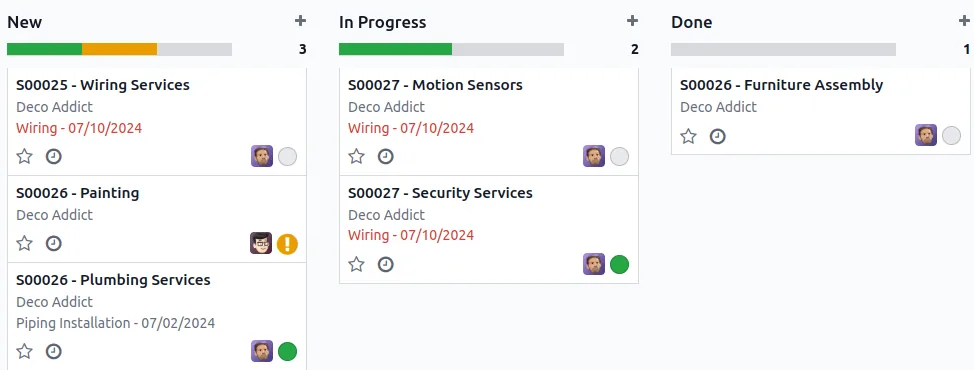
Sponsors see the same project data we see. We share a live project view rather than a slide that is a week old.
R = responsible, A = accountable, C = consulted, I = informed. The final matrix is tailored to your organization at kickoff.
| Activity | Client sponsor | Client project lead | Key users | Our project manager | Our consultants |
|---|---|---|---|---|---|
| Project charter and scope | A | R | I | R | C |
| Process design workshops | I | A | R | C | R |
| Solution design sign-off | A | R | C | C | R |
| Configuration and development | I | C | C | A | R |
| Data cleansing and extraction | I | A | R | C | C |
| Data load and reconciliation | I | A | R | R | R |
| User acceptance testing | I | A | R | C | C |
| End-user training | I | C | R | A | R |
| Go-live decision | A | R | C | R | C |
| Hypercare issue resolution | I | C | C | A | R |
On some projects the accountable owner for configuration sits with a client IT lead; we agree this in the first week.
Durations are typical ranges for a mid-sized UAE company on one platform. Multi-entity or multi-country rollouts take longer.
Durations are typical ranges; your plan is agreed after discovery.
Kickoff, project charter, RACI, governance calendar, environments and access set up.
Process workshops, fit-gap analysis and a signed solution design document.
Configuration, development, integrations and data migration rehearsals in sprints with demos.
System testing, then user acceptance testing with your key users on migrated data.
Cutover plan, final data load, go or no-go meeting and controlled go-live.
Daily stand-ups, priority fixes, first month-end close support and formal handover to support.
UAE requirements are built into the design and test stages, not checked at the end. Please confirm tax positions with your tax advisor.
Tax codes, TRN fields, tax invoice layouts and the VAT return mapping are reviewed at design sign-off and tested in UAT before EmaraTax filings depend on them.
Account and cost-center design is checked so finance can separate the reporting needed for corporate tax, including free zone entities where relevant.
If your go-live falls near your e-invoicing date (1 January 2027 for revenue of AED 50 million or more, 1 July 2027 for smaller businesses), the ASP connection is scoped as a project workstream. Check the latest Ministry of Finance / FTA guidance.
Where payroll is in scope, SIF generation and gratuity rules under Federal Decree-Law No. 33 of 2021 are tested with a parallel payroll run.
General information, not tax or legal advice. Rules change; confirm current FTA, MOHRE and Ministry of Finance guidance with your advisor.
These are the practical benefits clients notice. We do not attach invented percentages to them.
Clear accountable owners mean design questions get answered in days, not weeks.
Change control keeps budget conversations open and documented.
Stage gates and rehearsed data loads reduce last-minute surprises.
A named hypercare team supports your first close and payroll run.
Platform and service pages that connect to our implementation partnership model.
We configure the system for the rules UAE businesses report against, and test it before go-live.
General information, not tax or legal advice. Confirm current requirements with the FTA, MOHRE or your advisor. See all UAE compliance guides.
On-site workshops in Dubai, Abu Dhabi and Sharjah, and remote or on-site delivery across the Northern Emirates and free zones.
Official sources and references
Facts on this page were checked against these sources in October 2026. Rules change, so confirm current requirements before acting.
Still have a question? Our consultants are happy to help.
Ask an ExpertA sponsor who can make decisions, a project lead with real time allocated, and key users from each department for workshops and testing. We agree these names and time commitments in the project charter.
Every request is logged with its effect on cost, time and risk. Your project lead or sponsor approves, defers or declines it in writing. Small items can be grouped into a later phase so the go-live date stays protected.
Your team owns the accuracy of source data and signs off reconciliations. We own the migration templates, transformation, load scripts and rehearsals. The RACI matrix makes this split explicit.
Usually two to six weeks, long enough to cover at least one month-end close and, where relevant, one payroll cycle. After hypercare, the system moves to a support plan with agreed response times.
Yes. Many projects involve internal IT, a bank integration provider or an e-commerce agency. We add them to the RACI and governance calendar so handoffs are clear.
The same governance model is used for Zoho, Odoo, ERPNext, Dynamics 365 and custom ERP projects. Platform-specific tasks, such as AL extension deployment or Odoo module upgrades, sit inside the build and deploy stages.
Tell us how your business runs today and where it gets stuck. We'll recommend the right platform, outline the implementation approach and give you a realistic timeline, with no obligation.
Dubai, United Arab Emirates