L
O
A
D
I
N
G


Zoho, Odoo, ERPNext, Dynamics 365 and custom ERP, delivered by one accountable team.

Odoo's warehouse and barcode tools suit UAE 3PL and distribution operators well. Freight forwarding and storage billing need extra work, and we scope that openly from the start.
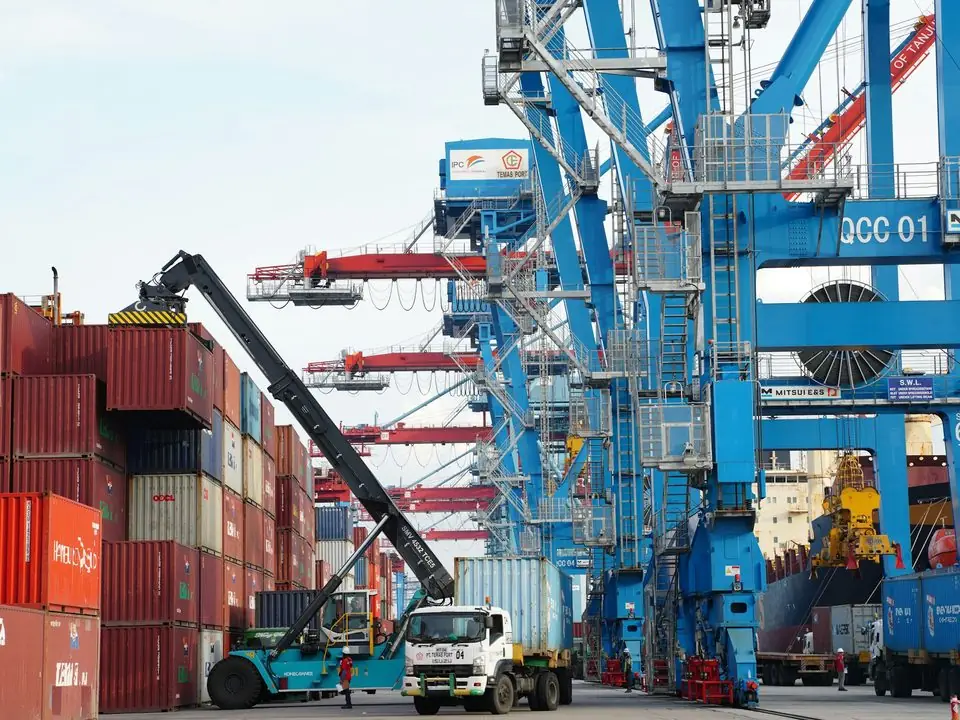
Odoo for logistics in the UAE is strongest in the warehouse: 3PL and distribution operators in Jebel Ali, Dubai South, KEZAD and Sharjah use its Inventory and Barcode apps to receive, store, pick and dispatch goods for many clients. It lacks native freight forwarding job files, customs declarations and route-optimising transport management, so forwarders usually add a specialist tool or custom module.
Odoo for logistics in the UAE is strongest in the warehouse. Third-party logistics providers in Jebel Ali, Dubai South, KEZAD and Sharjah's industrial areas use its Inventory and Barcode apps to receive, store, pick and dispatch goods for many clients from one system. Multi-step routes, putaway rules, batch and wave picking, and stock owned by third parties are all part of the standard product.
It is weaker in areas that specialist logistics software was built for. Odoo has no native freight forwarding job file with house and master bills of lading, no customs declaration module and no built-in transport management system with route optimization. Companies whose core business is forwarding usually pair Odoo accounting with a dedicated forwarding tool, or commission a custom job module. We say this at the first meeting so you can plan accordingly.
For warehousing, distribution and in-house transport fleets, Odoo covers a great deal: inbound and outbound operations, client-specific stock views, delivery carrier connections, fleet costs and the accounting behind them. If you run a forwarding desk alongside a warehouse, our page on ERP for freight forwarding explains the options for that side.
The products we configure, integrate and support on projects like this one.
 Odoo Invoicing / Accounting
 Odoo Sales
 Odoo CRM
 Odoo Inventory
 Odoo Purchase
 Odoo Manufacturing
Product names and logos are trademarks of their respective owners and are shown only to identify the software we implement.
These are the operational and commercial problems we hear from warehousing and transport companies.
A 3PL stores stock for dozens of clients in the same racks. Without owner tracking, client stock reports are built by hand and disputes follow.
Pallet days, inbound handling, picking and value-added services are billed from spreadsheets. Activity that is not recorded is not invoiced.
Paper pick lists lead to wrong items and short shipments during busy periods such as Ramadan, White Friday and year-end.
Fuel cards, Salik tolls, fines, servicing and registration renewals are recorded in different places. Cost per vehicle is unknown.
Clients email to ask whether an order has shipped. Customer service checks the warehouse floor before replying.
We map each step with barcode scanning so the system reflects the floor in real time.
One shared database: every step updates stock, finance and reports in real time.
Inventory and Barcode carry most of the operation. Billing and freight features are where configuration or custom work usually comes in.
Multi-warehouse setup, one, two or three-step receipts and deliveries, putaway rules, storage categories and stock by owner for consignment.
Mobile scanning for receipts, putaway, picking, packing, cycle counts and internal transfers.
Group picks across orders by zone, carrier or client to cut walking time in large warehouses.
Shipping connectors for international couriers such as DHL, FedEx and UPS. Regional couriers usually need an API integration we build.
Vehicle register, contracts, odometer readings, service logs and cost reports per vehicle and driver.
Recurring storage charges and activity-based invoices. Pallet-day billing typically needs a small custom calculation.
Clients log in to see their orders, deliveries and invoices without calling your team.
Client queries and damage claims logged as tickets, linked to the order and tracked to resolution.
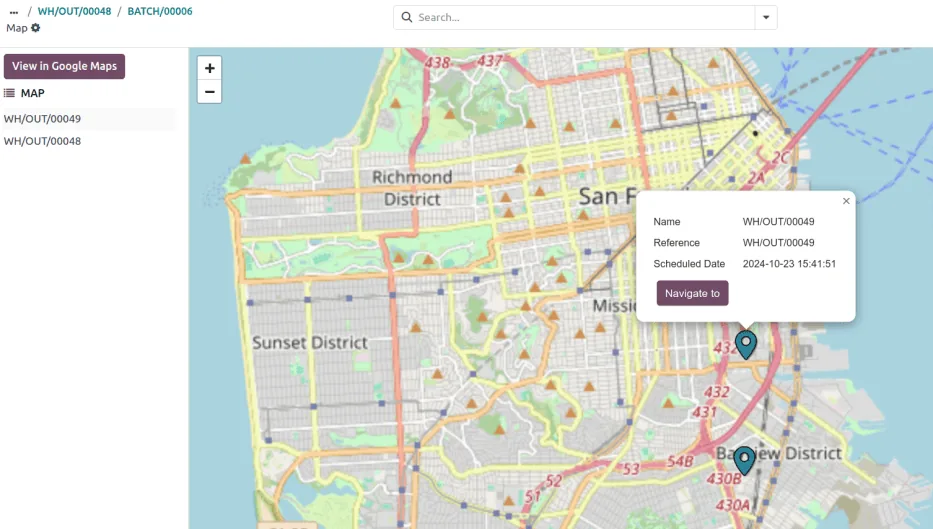
Warehouse and transport managers need to see the day's workload and any exceptions. We build this view from Odoo inventory and fleet data.
Logistics touches customs, free zones and international transport, each with its own VAT treatment. Configure Odoo with your tax advisor's guidance.
Some international transport and related services may be zero-rated for VAT, while domestic delivery is generally standard-rated at 5%. We set fiscal positions so each service type invoices with the correct code for review.
Goods held in designated zones such as Jebel Ali or KEZAD can follow special VAT rules. Separate warehouses and tax positions in Odoo keep these movements distinct from mainland stock.
Stock owned by 3PL clients should not appear in your balance sheet. Odoo's owner tracking keeps client goods out of your valuation while still counting them in the warehouse.
Drivers and warehouse workers are paid through MOHRE's Wage Protection System. Odoo payroll can hold the salary data and support preparing the SIF for your bank or exchange house.
Storage and transport invoices to business clients will fall under PINT AE e-invoicing through an Accredited Service Provider, from 1 January 2027 or 1 July 2027 depending on revenue. Check the latest Ministry of Finance and FTA guidance.
General information, not tax or legal advice. Rules change; confirm current FTA, MOHRE and Ministry of Finance guidance with your advisor.
Warehouse rollouts depend on location labeling and scanner readiness as much as software. These durations are typical ranges.
Durations are typical ranges; your plan is agreed after discovery.
Walk-through of the warehouse, location naming, client contracts, billing rules and current systems.
Locations, routes, putaway rules, owner tracking, picking methods and label formats.
Storage and handling charge rules, carrier connectors and any client EDI or API links.
Location barcodes printed and fixed, then a full count loaded per client and location.
Shift-by-shift support for receivers, pickers and supervisors until scanning becomes routine.
Explore logistics ERP by segment, compare platforms or look at Odoo's warehouse apps.
We configure the system for the rules UAE businesses report against, and test it before go-live.
General information, not tax or legal advice. Confirm current requirements with the FTA, MOHRE or your advisor. See all UAE compliance guides.
On-site workshops in Dubai, Abu Dhabi and Sharjah, and remote or on-site delivery across the Northern Emirates and free zones.
Official sources and references
Facts on this page were checked against these sources in October 2026. Rules change, so confirm current requirements before acting.
Still have a question? Our consultants are happy to help.
Ask an ExpertYes. Odoo can record an owner on stock, so each client's goods are tracked separately while sharing the same locations. Reports and the portal can then be filtered by client.
Not as a standard app. There is no built-in job file for air or sea shipments, bills of lading or customs declarations. Forwarders usually use a specialist tool with Odoo accounting, or a custom job module that we scope separately.
Standard Odoo does not calculate pallet-days automatically. We add a small calculation that reads stock by client and date, then creates invoice lines with your agreed rates, alongside handling fees per receipt or order.
Odoo Barcode runs in a browser or the mobile app, so most Android handheld scanners and many rugged devices work. We test your chosen device in your warehouse before you buy in quantity.
Odoo includes connectors for several international carriers. Regional and last-mile couriers in the UAE usually require an API integration, which we build if the courier provides a documented API.
Tell us how your business runs today and where it gets stuck. We'll recommend the right platform, outline the implementation approach and give you a realistic timeline, with no obligation.
Dubai, United Arab Emirates