L
O
A
D
I
N
G


Zoho, Odoo, ERPNext, Dynamics 365 and custom ERP, delivered by one accountable team.

For groups that run a mainland LLC, a free zone company and a holding entity side by side, we keep each set of books separate and the group view clear.
Yes. A multi-company ERP lets a UAE group run a mainland LLC, a free zone entity in JAFZA or SAIF Zone and an ADGM or DIFC holding company in one database, each with its own chart of accounts, TRN, trade licence documents and statutory books. Intercompany sales mirror automatically, and consolidated reports apply eliminations and translate currencies.
Multi company ERP UAE groups need is driven by how businesses are structured here. A trading group often holds a mainland LLC to sell locally, a free zone establishment in JAFZA or SAIF Zone for re-export, and a holding company in ADGM or DIFC that owns the shares. A family business may run a contracting company, a building materials trader and a real estate company under the same owners. Each is a separate legal entity with its own trade licence, bank accounts, TRN and statutory accounts.
Running each entity in a separate system, or a separate copy of accounting software, works until the group starts trading with itself. Then the mainland company buys from the free zone company, staff are shared, a central finance team pays bills on behalf of others, and month-end means reconciling intercompany balances by email. Consolidated reporting for the owners or the bank becomes a spreadsheet exercise that nobody wants to repeat.
A multi company setup keeps each entity's ledger, tax settings and documents separate while letting authorised users switch between them, post intercompany transactions that mirror automatically, and produce group reports. This is different from running several branches of one company, which we cover on our multi branch ERP page.

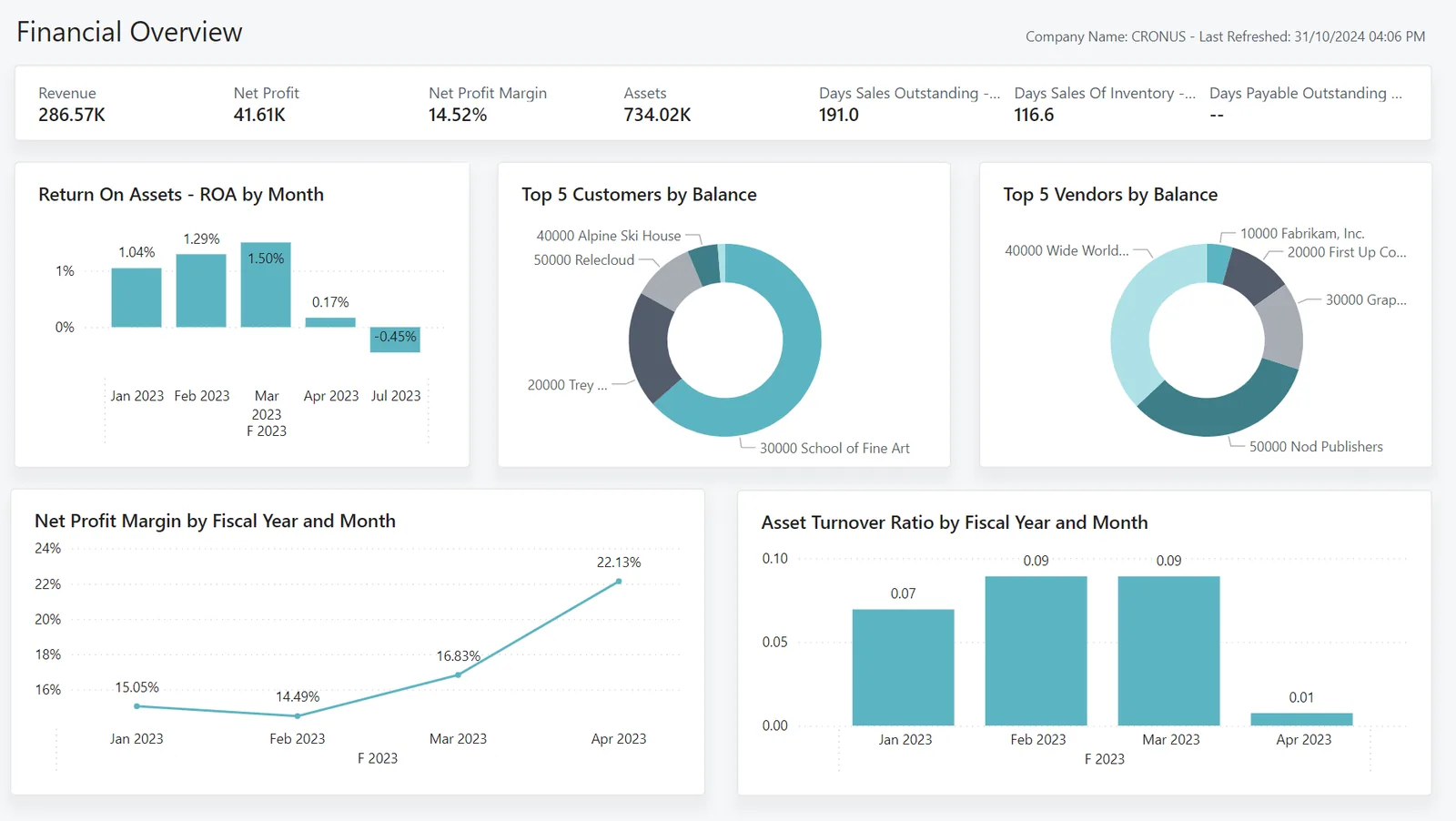
Group CFOs and owners see each entity and the combined picture without exporting from several systems.
This is the transaction that causes most month-end pain when entities run in separate systems. In a multi company ERP it becomes routine.
One shared database: every step updates stock, finance and reports in real time.
These capabilities separate a real multi-entity setup from several unrelated databases.
Each company has its own fiscal settings, tax registration, sequences for invoices and documents, and bank accounts. Users only see the entities they are assigned to.
A sale from one group company creates the matching purchase in the other, with agreed transfer prices. Fewer mismatches and less manual posting.
Group trial balance and statements combining entities, with intercompany revenue, cost and balances removed so the group is not reported twice.
An entity outside the UAE, for example in Saudi Arabia or India, can keep its own currency while the group reports in AED.
Central HR, IT and finance costs recharged to group entities on agreed keys such as headcount or revenue, with the recharge invoices generated by the system.
A free zone company's accountant cannot post into the mainland ledger by mistake. Group roles can view across entities for reporting.
All four platforms can serve groups, but their architecture differs. This matters most for intercompany automation and consolidation.
| Zoho | Odoo | ERPNext | Dynamics 365 Business Central | |
|---|---|---|---|---|
| Structure | Separate organisation per entity in Zoho Books | Multiple companies in one database with a company switcher | Multiple companies in one site | Multiple companies in one environment |
| Intercompany transactions | Manual or automated with Zoho Flow and Deluge | Inter-company rules can create mirror orders and bills (Enterprise) | Inter-company sales and purchase invoices | Intercompany partners, inbox and outbox |
| Consolidation | Typically built in Zoho Analytics | Multi-company reporting; consolidation approach depends on version | Consolidated financial statement reports | Consolidation of business units with eliminations |
| Shared master data | Separate per organisation unless synced | Products and contacts can be shared or company-specific | Shared items and parties with company-specific accounts | Per company; master data synchronization available |
| Mixed currencies | Each organisation has its own base currency | Each company has its own currency | Each company has its own currency | Each company has its own local currency |
| Best fit | Smaller groups with light intercompany activity | Groups trading heavily between entities | Groups wanting open-source control and lower licence cost | Larger groups with formal consolidation needs |
Capabilities depend on edition and version. We test intercompany and consolidation scenarios during design, not after go-live.
Groups often keep some systems at entity level. These are the connections we plan for.
Group structures raise specific VAT and corporate tax questions. The ERP can support whichever structure you choose; the choice itself needs your tax advisor.
Each entity can register for VAT separately, or eligible related companies can apply to register as a VAT tax group with one TRN. The ERP setup differs for each, so confirm the registration structure with your tax advisor first.
Under Federal Decree-Law No. 47 of 2022, each entity is assessed separately unless a corporate tax group is formed under the qualifying conditions. Entity-level books and clear intercompany records support either route.
A Qualifying Free Zone Person can access 0% on qualifying income subject to conditions. Keeping the free zone company's books, revenue streams and transactions with mainland group companies clearly separated helps support that analysis.
Corporate tax rules expect related-party transactions to follow the arm's length principle. Recording intercompany prices and recharges in the ERP gives your advisor the transaction data needed for documentation.
General information, not tax or legal advice. Rules change; confirm current FTA, MOHRE and Ministry of Finance guidance with your advisor.
Explore related modules and the pages that cover group compliance and larger organisations.
We configure the system for the rules UAE businesses report against, and test it before go-live.
General information, not tax or legal advice. Confirm current requirements with the FTA, MOHRE or your advisor. See all UAE compliance guides.
On-site workshops in Dubai, Abu Dhabi and Sharjah, and remote or on-site delivery across the Northern Emirates and free zones.
Official sources and references
Facts on this page were checked against these sources in October 2026. Rules change, so confirm current requirements before acting.
Still have a question? Our consultants are happy to help.
Ask an ExpertBranches are parts of one legal entity, sharing one TRN and one set of statutory accounts. Companies are separate legal entities, each with its own licence, books and tax registration. Many groups need both: several companies, some with several branches.
It is much easier if they are, because intercompany automation and consolidation work best inside one system. If an acquired entity has its own ERP, we can bring its trial balance into group reporting until it is migrated.
Yes. They remain separate companies in the ERP with separate ledgers, tax settings and documents. Users and master data can be shared where appropriate, with permissions controlling who posts where.
When transactions mirror automatically, both sides post from the same source, so balances usually agree. A reconciliation report highlights differences, typically from manual entries or timing, so they can be cleared before consolidation.
Yes. Each entity keeps its own currency, and consolidation translates balances to the group currency using the rates you set. Your auditor should agree the translation method.
It depends on the number of entities and how much they trade with each other. A group of two or three entities on a focused scope often takes several months, and we usually phase entities rather than going live with all at once.
Tell us how your business runs today and where it gets stuck. We'll recommend the right platform, outline the implementation approach and give you a realistic timeline, with no obligation.
Dubai, United Arab Emirates