L
O
A
D
I
N
G


Zoho, Odoo, ERPNext, Dynamics 365 and custom ERP, delivered by one accountable team.

Paying for goods that never arrived, or at a price nobody approved, is more common than most finance teams admit. We set up purchase management so every bill is checked before it is paid.
Purchase management software for UAE companies runs the buying cycle in one system: requisition with budget check, tiered approval, purchase order at agreed prices, goods receipt, three-way matching of the supplier bill, and payment. It also allocates freight and customs duty on imports as landed costs, handles foreign-currency purchases and supports input VAT recovery and reverse charge on imports.
Purchase management software UAE companies use handles the daily transactions of buying: a department requests something, a manager approves it, a purchase order goes to the supplier, goods are received and checked, the supplier's bill is matched to both, and payment is released. When each of those steps is in one system, overpayments and duplicate bills become hard to slip through.
Without that control, the problems are predictable. Site staff phone suppliers directly and the bill arrives with no order behind it. Goods are short-shipped but invoiced in full. A container from China or India lands at Jebel Ali and its freight, duty and clearing charges are booked as general expenses instead of being added to the cost of the stock, so margins on those items look better than they really are.
This page covers the operational purchase cycle. For supplier selection, RFQs and agreements, see procurement software. If you are on Odoo specifically, our Odoo Purchase page covers that app in detail.

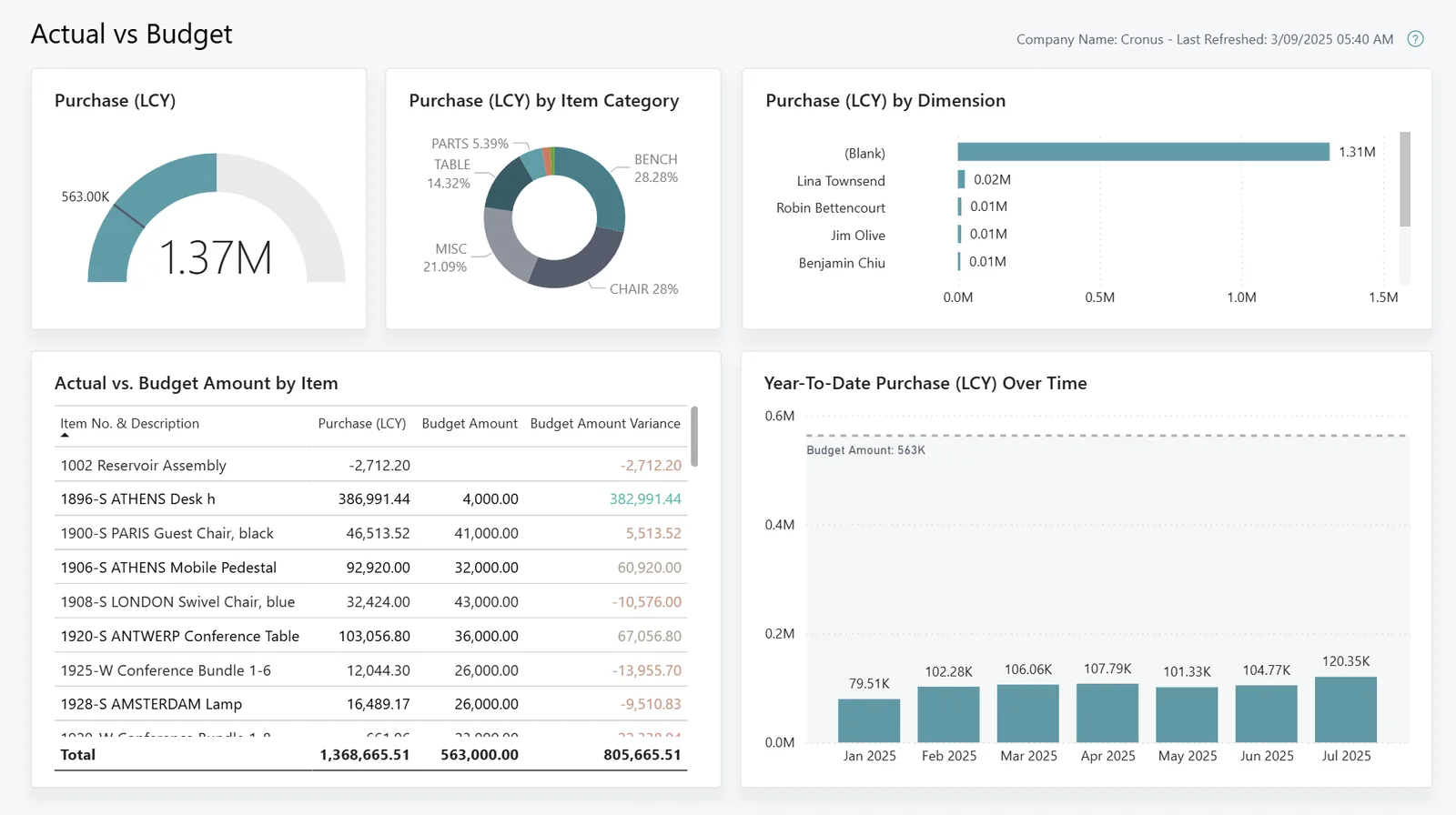
Buyers and accounts payable share one screen so they can see what is ordered, what has arrived and what is blocked from payment.
This is the standard flow we configure, with thresholds deciding which steps a given purchase must go through.
One shared database: every step updates stock, finance and reports in real time.
These six features are where UAE trading, contracting and services companies usually recover the most money and time.
Staff raise requests against a department, project or cost center, and the system shows remaining budget before approval.
Approval routes based on amount, category or project, so a manager signs small orders and directors only see large ones.
Orders carry agreed price, currency, Incoterms, delivery date and payment terms, and can be emailed or shared through a portal.
Receivers record actual quantities, partial shipments and rejections, updating stock and the open order balance.
Bills are compared against the order and the receipt, and any quantity or price difference beyond tolerance is held for review.
Freight, insurance, customs duty and clearing charges are allocated to imported items so stock cost and margins are accurate.
The core purchase cycle is well covered on all four platforms. Differences show up in requisitions, matching controls and landed cost handling.
| Zoho | Odoo | ERPNext | Dynamics 365 Business Central | |
|---|---|---|---|---|
| Requisitions | Approval flows on purchase orders; requisition forms often in Zoho Creator | Purchase requests via approvals or replenishment | Material Request documents | Purchase quotes and requisition worksheets |
| Approvals | Multi-level approval for purchase orders and bills | Purchase order approval thresholds and approval rules | Configurable workflow states | Approval workflows by amount and user |
| Bill matching | Bills created from purchase orders and receives | Bill control by ordered or received quantity | Purchase invoice against receipt with tolerance settings | Purchase invoice posting against receipts |
| Landed costs | Landed cost allocation available (check edition) | Landed costs app allocating charges to receipts | Landed Cost Voucher | Item charges assigned to receipts |
| Fit | Small to mid-sized traders | Traders and manufacturers wanting purchase tied to stock and MRP | Cost-conscious traders and distributors | Mid-sized firms with formal controls |
Exact behavior depends on edition and configuration. We confirm during discovery.
These links keep orders, receipts and bills flowing without manual re-entry.
Purchases are where input VAT is recovered and import tax is accounted for, so setup matters. Confirm the treatment of specific purchases with your tax advisor.
Input VAT at 5% is generally recoverable when you hold a valid tax invoice and the purchase relates to taxable supplies. Bills should carry the supplier TRN and be coded so recoverable and blocked VAT are separated.
VAT-registered importers usually account for import VAT through the reverse charge on their VAT return rather than paying it at the border. The ERP should record customs declaration references so the return can be reconciled.
Customs duty paid on imports is a cost of the goods, not recoverable VAT. Allocating it through landed costs keeps inventory value and corporate tax figures accurate. Your customs broker can confirm duty rates for your products.
Under Ministerial Decisions 243 and 244 of 2025, supplier invoices will arrive as structured e-invoices through Accredited Service Providers once your phase starts in 2027. Check the latest Ministry of Finance and FTA guidance.
General information, not tax or legal advice. Rules change; confirm current FTA, MOHRE and Ministry of Finance guidance with your advisor.
See sourcing, approvals and platform guides that connect to the purchase cycle.
We configure the system for the rules UAE businesses report against, and test it before go-live.
General information, not tax or legal advice. Confirm current requirements with the FTA, MOHRE or your advisor. See all UAE compliance guides.
On-site workshops in Dubai, Abu Dhabi and Sharjah, and remote or on-site delivery across the Northern Emirates and free zones.
Official sources and references
Facts on this page were checked against these sources in October 2026. Rules change, so confirm current requirements before acting.
Still have a question? Our consultants are happy to help.
Ask an ExpertThree-way matching compares the supplier bill with the purchase order and the goods receipt before payment. It catches short deliveries, price changes and duplicate bills. Most companies buying physical goods benefit from it; service purchases often use a two-way match instead.
Yes. Purchase orders and bills can be in foreign currency, with AED values calculated at the exchange rate on each date and gains or losses posted on payment. This is standard on all four platforms we implement.
Through landed costs. When the forwarder's and broker's invoices arrive, they are allocated to the items on the related receipt by value, weight, volume or quantity. The stock cost updates and future margins reflect the true cost.
Yes. Requisitions can be raised and approved from mobile apps or a web portal, which helps contractors and multi-branch businesses where requesters are rarely at a desk.
Yes. We migrate open purchase orders, supplier balances and item masters from Tally, QuickBooks or Sage into the new ERP. We do not implement those packages, but moving away from them is a regular project for us.
If accounting and inventory are already in place, adding requisitions, approvals and matching often takes three to six weeks. As part of a full ERP rollout, it is typically delivered with the inventory phase.
Related Solutions
Related Industries
Related ERP Platforms
Related Guides
Talk to us about your purchase cycle and we will show where an ERP would tighten control.
Dubai, United Arab Emirates