L
O
A
D
I
N
G


Zoho, Odoo, ERPNext, Dynamics 365 and custom ERP, delivered by one accountable team.

FM companies live or die on contract margin and SLA performance. We connect the work order side of the business with finance, payroll and procurement so you can see both, site by site.
ERP for facility management companies in the UAE treats each FM contract as a profit centre with its own revenue, manpower, PPM plan, reactive work orders, spare parts and subcontractor costs, linked to finance and WPS payroll. Odoo and Dynamics 365 suit hard services and larger groups, while Zoho One or ERPNext fit soft services providers such as cleaning and security.
ERP for facility management companies in the UAE needs to serve a business that sells a promise: keep the chillers running, the lifts certified, the lobbies clean and the security posts manned, across dozens of buildings and to an agreed response time. Integrated FM providers in Dubai and Abu Dhabi typically combine hard services such as MEP maintenance with soft services such as cleaning, security, pest control and reception staff.
Many FM firms already run a CAFM or helpdesk tool for work orders. The trouble is that the tool knows about jobs but not about money. It cannot tell you that a tower in Business Bay is losing margin because overtime, spare parts and subcontracted lift maintenance exceed the contract value. Finance knows the cost, operations knows the jobs, and the two are matched in Excel once a quarter.
We set up ERP so that each FM contract is a cost center with its own revenue, deployed manpower, PPM plan, reactive work orders, spare parts and subcontractor costs. Whether the work order engine is inside the ERP or an existing CAFM connected through an API, the contract profit picture is the same. For platform-specific options, see Zoho for facility management and Odoo for facility management.

These challenges come up in almost every integrated FM business we review.
Technicians float between sites, spare parts come from a central store and supervisors cover several buildings. Without allocation rules, every contract looks profitable on paper.
Clients deduct penalties for late response or missed PPM. If SLA performance is only compiled at month-end, there is no chance to correct course before the deduction.
Asset registers handed over at mobilization are often incomplete. PPM schedules built on them miss equipment, which leads to failed audits and unplanned breakdowns.
Many soft FM contracts bill per deployed head or per hour. When attendance, leave and replacements are not tied to billing, invoices are queried and payment slows.
Lifts, fire systems, BMS and pest control are often subcontracted. Their costs and certificates need to sit against the right building and contract.
We follow a contract from tender to renewal so that operations and finance share each step.
One shared database: every step updates stock, finance and reports in real time.
The modules below cover both hard and soft services and the finance behind them.
FM contracts with scope, sites, service lines, pricing basis, SLA terms and renewal dates.
Equipment by building, floor and system, with make, model, warranty and maintenance history.
PPM schedules by asset class and frequency, generating work orders automatically.
Tickets from clients, tenants or the call center, prioritized and dispatched with SLA clocks running.
Deployment rosters per site, attendance capture and replacement tracking for soft services staff.
Central and site stores, parts issued to work orders and reorder levels for critical spares.
Specialist subcontracts with scope, cost per visit and compliance certificates per building.
Large blue-collar payrolls with allowances, overtime, accommodation and WPS file generation.
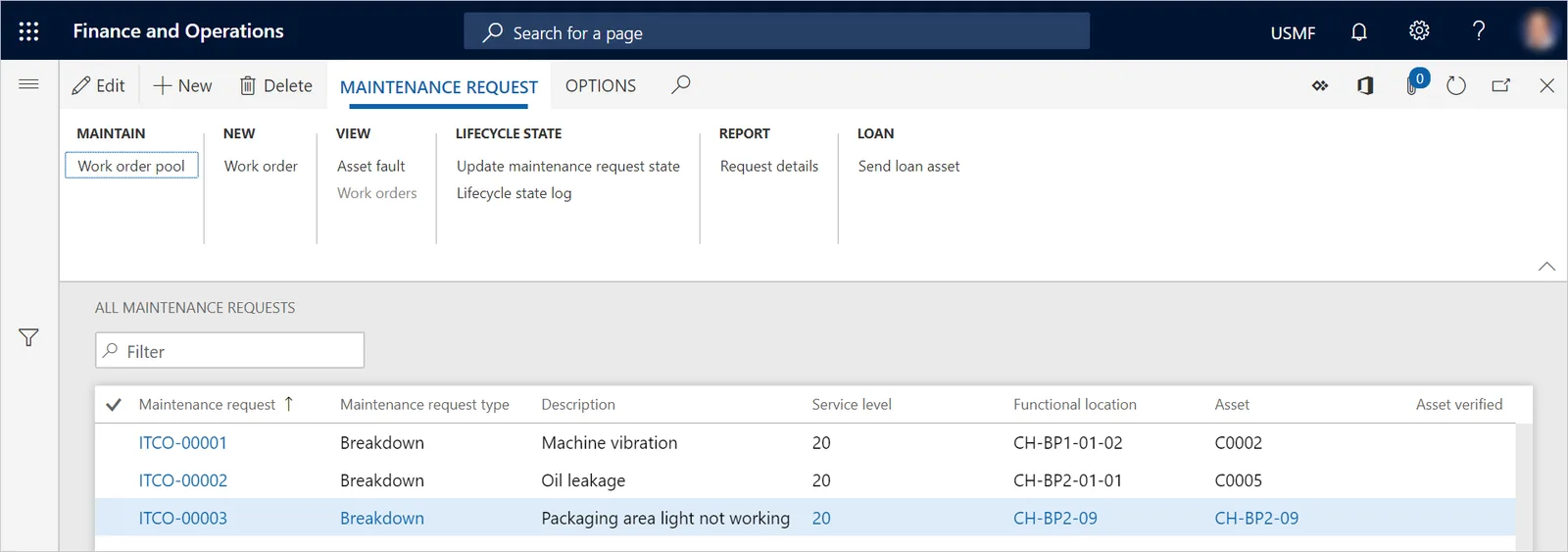
Contract managers watch SLA performance and maintenance backlog; directors check margin per contract.
FM businesses vary from a single-service provider to a large integrated group. This is where each platform tends to fit.
| FM profile | Usual fit | Why |
|---|---|---|
| Soft services provider (cleaning, security, manpower) | Zoho One or ERPNext | Contracts, attendance, payroll and recurring billing without heavy maintenance features |
| Hard services or MEP maintenance company | Odoo | Maintenance, field service, helpdesk, inventory and accounting share one database |
| Integrated FM group across emirates | Microsoft Dynamics 365 | Field Service with multi-entity finance and stronger controls for large contract portfolios |
| FM firm keeping its existing CAFM | Any of the above with integration | We connect the CAFM to ERP so work orders, parts and labour post to the contract ledger |
ERP should be configured to support these requirements. Confirm tax treatment with your tax advisor.
FM services are generally standard-rated at 5%. Monthly invoices to landlords, owners associations and corporate clients need TRNs and the prescribed tax invoice fields, and returns go through EmaraTax.
FM companies often carry big payrolls of technicians, cleaners and guards. Payroll should produce the WPS Salary Information File and handle gratuity accruals under the UAE Labour Law.
Corporate tax is 9% on taxable income above AED 375,000. Contract-level profit reporting helps finance support the figures in the return and in audits.
Recurring monthly FM invoices will need to flow through an Accredited Service Provider under the PINT AE model, from 1 January 2027 for businesses with revenue of AED 50 million or more and 1 July 2027 for others. Check the latest Ministry of Finance and FTA guidance.
General information, not tax or legal advice. Rules change; confirm current FTA, MOHRE and Ministry of Finance guidance with your advisor.
We help you measure these from your own data rather than promise figures.
Labour, parts, subcontractors and overheads allocated to each contract show which ones to renew and which to reprice.
Live SLA clocks let supervisors act on tickets about to breach instead of explaining them afterwards.
Completed checklists, readings and photos are stored against each asset for client and authority audits.
Invoices and service reports are generated from attendance and work order data, reducing client queries.
Typical ranges for an FM company with several contracts and a mixed workforce.
Durations are typical ranges; your plan is agreed after discovery.
Review contract types, SLA terms, CAFM usage, rosters, stores and billing models.
Define contract and site structure, asset hierarchy, SLA rules and cost allocation methods.
Configure modules, mobile apps and integrations with CAFM, attendance devices and banks.
Import asset registers, PPM schedules, open tickets, contracts and staff records.
Start with a few contracts, refine SLA rules and reports, then extend to the full portfolio.
Platform options and neighboring service industries.
We configure the system for the rules UAE businesses report against, and test it before go-live.
General information, not tax or legal advice. Confirm current requirements with the FTA, MOHRE or your advisor. See all UAE compliance guides.
On-site workshops in Dubai, Abu Dhabi and Sharjah, and remote or on-site delivery across the Northern Emirates and free zones.
Official sources and references
Facts on this page were checked against these sources in October 2026. Rules change, so confirm current requirements before acting.
Still have a question? Our consultants are happy to help.
Ask an ExpertNot always. If your CAFM works well for technicians and clients, we can integrate it so work orders, labour and parts flow into ERP. If it is weak or expensive, moving work orders into the ERP's own maintenance or field service module removes one system.
Yes. Each contract carries its own priority levels and response and resolution targets. Tickets start a clock when logged, and reports show breaches by contract, site and priority.
Technicians log time on work orders, so most labour posts directly. Remaining shared costs such as supervisors or vehicles are allocated by rules you agree, for example by headcount or contract value.
Most platforms we implement offer a customer portal, email-to-ticket and WhatsApp integration. Tickets raised there carry the client and site automatically, which speeds up dispatch.
It depends on size and service mix. Odoo and Dynamics 365 are strong for hard services and larger groups, while Zoho and ERPNext suit soft services and smaller firms. We implement all of them, so we recommend after discovery.
Related Solutions
Related Industries
Related ERP Platforms
Talk to our Dubai team about connecting work orders, manpower and finance for your contracts.
Dubai, United Arab Emirates