L
O
A
D
I
N
G


Zoho, Odoo, ERPNext, Dynamics 365 and custom ERP, delivered by one accountable team.

For charities, foundations, associations and community organizations that must show where every dirham came from and where it went.
An ERP for nonprofit organisations in the UAE is built on fund accounting: every transaction carries a fund and programme, so charities, foundations and associations can prove restricted donations were used as intended. It tracks corporate donations, grants, Zakat and Sadaqah separately, issues donation receipts, and reports to donors, boards and regulators, with rules depending on legal form and emirate.
An ERP for nonprofit organizations in the UAE is built around one question donors, boards and regulators all ask: was this money used for the purpose it was given? Charities, family foundations, professional associations and community groups receive funds with conditions attached. A corporate donation for a Ramadan food program, a grant for a school project abroad and general Zakat or Sadaqah contributions must each be tracked and reported separately.
Many UAE nonprofits start with standard accounting software and a donor spreadsheet. That works until restricted and unrestricted money is mixed in one bank account, program managers need to see their remaining budget, and the auditor asks for a fund-by-fund statement. Volunteers, in-kind donations of food or equipment, and support to beneficiaries add more records that rarely connect to the ledger.
UAE ERP Experts is based in Dubai and configures fund accounting on Odoo, ERPNext, Zoho and Dynamics 365. The finance design is similar in spirit to our financial reporting ERP work, using analytic dimensions for funds, programs and donors. Larger organizations with project-based field work may also find our project management ERP page relevant.

These are the problems finance and program teams in charities and associations raise most often.
When all donations land in one income account, it is hard to prove that a restricted gift was spent on its intended program. Auditors and major donors then ask for manual reconstructions.
Fundraising teams keep donor lists in spreadsheets or a simple CRM. Receipts, pledges and thank-you letters do not match finance records, and repeat donors are not recognized.
Each grant has its own budget lines, reporting periods and eligible costs. Program staff compile reports from bank statements and invoices, which takes days and invites errors.
Food parcels, school fees, medical support and cash assistance need eligibility checks, approvals and proof of delivery. Paper files make it difficult to avoid duplication and to report totals.
Donated goods, venue space and volunteer hours are a real part of the organization's work but are often not recorded at all, so reports understate what was delivered.
We configure this flow for donations, grants and appeals, with approval steps that match your governance.
One shared database: every step updates stock, finance and reports in real time.
Most nonprofits need finance and donor modules first, then add programs, beneficiaries and volunteers.
Funds, programs and grants as analytic dimensions on every transaction, with fund balance statements on demand.
Donor profiles, giving history, pledges, recurring gifts, receipts and communication preferences.
Grant agreements with budgets, eligible cost categories, reporting dates and drawdowns.
Budgets per program and project, with spending against budget visible to program managers.
Applications, eligibility checks, approvals and delivery records for aid cases, with restricted access to personal data.
Purchase requests, quotations and multi-level approvals that match your delegation of authority.
Donated goods received, valued, stored and distributed, such as food parcels or school kits.
Volunteer registrations, hours and events, plus staff records and WPS payroll for employees.
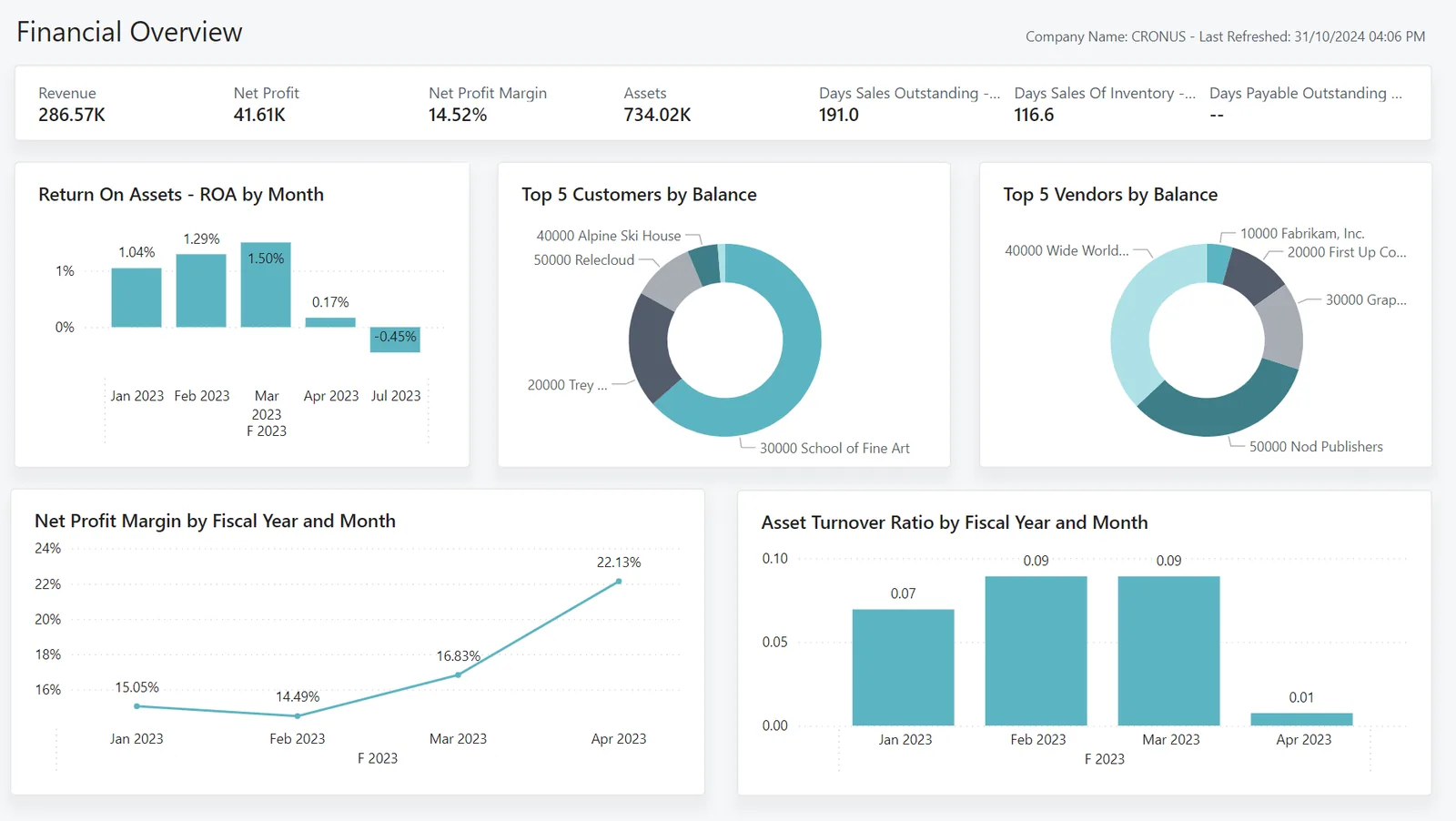
A budget-centered dashboard that finance, program managers and the board can all read.
The right fit depends on your size, donor volume and whether you run field programs.
| Organization profile | Platform that usually fits | Why it fits | Watch-out |
|---|---|---|---|
| Small association or community group | Zoho Books with Zoho CRM | Reporting tags for funds, VAT-ready books and a donor CRM at modest cost | Fund balance statements need careful tag discipline |
| Charity with many donors and appeals | ERPNext | Open source with a nonprofit app for donors, memberships and grants, plus accounting dimensions | Needs a partner for hosting and for tailoring donor reports |
| Foundation running programs and in-kind distribution | Odoo | Analytic accounting, CRM, inventory, purchase approvals and HR in one system | Donor-specific features are configured rather than standard |
| Large NGO or foundation with international programs | Dynamics 365 Business Central | Dimensions, multi-currency, multi-company and Power BI for board reporting | Higher setup effort; check Microsoft's current nonprofit licensing offers |
We implement Zoho, Odoo, ERPNext, Dynamics 365 and custom ERP. Ask the vendor or us about any nonprofit pricing programs, which change over time.
Nonprofit rules differ by legal form and emirate. The ERP supports the records; your legal and tax advisors confirm what applies.
Collecting donations in the UAE is regulated, and fundraising usually needs approval from the relevant authority, such as IACAD or the Community Development Authority in Dubai. The system can store permit references against each campaign.
Donations given without anything in return are generally outside the scope of VAT, while sales of goods or services are not. Some charities designated by Cabinet Decision may recover VAT. Confirm your position with your tax advisor.
Under Federal Decree-Law No. 47 of 2022, certain Qualifying Public Benefit Entities listed by Cabinet Decision can be exempt, subject to conditions. Others may need to register and file. Keep books that support either position.
Regulators and donors often require audited statements. Beneficiary records contain personal data, so access controls and retention rules are configured from the start.
General information, not tax or legal advice. Rules change; confirm current FTA, MOHRE and Ministry of Finance guidance with your advisor.
Directional outcomes. They depend on consistent fund coding and donor data entry.
Restricted gifts are traceable from receipt to spending, which supports major donor and corporate partner reporting.
Grant statements come from coded transactions rather than manual compilation.
Managers see their remaining budget before committing spend.
Fund balances, approvals and supporting documents are linked, reducing back-and-forth with auditors.
Indicative durations. Donor data clean-up and fund design are usually the biggest tasks.
Durations are typical ranges; your plan is agreed after discovery.
Review funds, programs, grant agreements, donor data, approval policies and reporting obligations.
Design the chart of accounts, fund and program dimensions, and the donor and grant structure.
Set up accounting, donor management, budgets, approvals, beneficiary cases and payroll.
Clean and load donor records, open pledges and opening fund balances, then reconcile with the last audit.
Run live with close support and produce the first board and donor reports from the new system.
More reading on finance, approvals and platform options for nonprofits.
We configure the system for the rules UAE businesses report against, and test it before go-live.
General information, not tax or legal advice. Confirm current requirements with the FTA, MOHRE or your advisor. See all UAE compliance guides.
On-site workshops in Dubai, Abu Dhabi and Sharjah, and remote or on-site delivery across the Northern Emirates and free zones.
Official sources and references
Facts on this page were checked against these sources in October 2026. Rules change, so confirm current requirements before acting.
Still have a question? Our consultants are happy to help.
Ask an ExpertThe main difference is fund accounting. Every transaction carries a fund and program, so you can show restricted fund balances and prove that donations were used as intended. Donor, grant and beneficiary records are linked to the same ledger.
Yes. Receipts are generated when a donation is recorded, with donor details, amount, campaign and fund. Formats can be adjusted to your organization's requirements.
Each type can be set up as its own fund with eligibility rules for distribution. Your Sharia and governance advisors define the rules; the ERP keeps the funds separate and reports on them.
It depends on your legal form, activities and any Cabinet Decision designations. We configure the system to support the position your tax advisor confirms, and we do not give tax advice.
Yes. Volunteer hours can be logged against events or programs, and donated goods can be received into inventory with a value, then tracked through distribution.
Small groups can start with accounting, fund tags and a donor list in Zoho or ERPNext, then add grants and beneficiary modules as programs grow.
Related Solutions
Related Industries
Related ERP Platforms
Related Guides
Tell us about your funds, donors and reporting obligations, and we will suggest a setup that keeps every dirham accountable.
Dubai, United Arab Emirates