L
O
A
D
I
N
G


Zoho, Odoo, ERPNext, Dynamics 365 and custom ERP, delivered by one accountable team.

For suppliers of pipes, valves, fittings, flanges, lubricants and petroleum products who sell to operators, EPC contractors and resellers.
An oil and gas supply trader in the UAE needs ERP that traces pipes, valves, flanges and fittings back to a mill, heat number and material test certificate (MTC), tracks tenders and RFQs, and converts lubricants and petroleum products between litres, metric tons and barrels using density. Typical users operate in Mussafah, ICAD, Ruwais, Jebel Ali and Sharjah, supplying operators and EPC contractors.
An ERP for oil and gas trading in the UAE is built for traders who supply the sector rather than operate wells. Their customers are operators, EPC contractors and drilling service companies, and every delivery must be traceable back to a mill, a heat number and a material test certificate (MTC).
Oilfield supply traders in Abu Dhabi's Mussafah and ICAD areas, Ruwais, Jebel Ali and Sharjah handle pipes, flanges, valves, fittings, gaskets and fasteners in many grades and schedules. Others trade lubricants, base oils, bitumen or refined products, where quantities are recorded in liters, metric tons or barrels and conversions depend on density. Platform-specific detail is on our Odoo for oil and gas page.
This page focuses on trading and supply. If you run operations, maintenance or drilling services, our page on ERP for oil and gas companies covers that side. Here we look at tender quotations, vendor registration documents, heat-number traceability, inspection at receipt and the VAT setup that petroleum product sales can require.
These are the issues that make general trading software fall short for this sector.
A customer asks for the MTC of flanges delivered six months ago and the team searches email folders. If the heat number was never linked to the delivery, the claim is hard to defend.
One pipe item can vary by size, schedule, grade, standard and end type. Free-text descriptions lead to duplicate items and wrong picks.
Customers issue RFQs with strict deadlines, technical deviations and commercial conditions. Tracking which RFQs were won, lost or pending is often manual.
Supplier registrations, ISO certificates, trade licenses and approvals expire. A lapsed document can block participation in the next tender.
Lubricants and petroleum products are bought and sold in different units, and volume can depend on temperature and density. Errors here go straight to the margin.
The flow below keeps traceability intact from the mill certificate to the customer's delivery note.
One shared database: every step updates stock, finance and reports in real time.
Traceability and documentation sit at the center; the rest of the system supports them.
Each receipt is recorded with heat or batch numbers, which follow the material to every delivery.
Size, schedule, grade, standard and end type as attributes, reducing duplicate items and wrong picks.
RFQs logged with deadlines, offer revisions and win or loss reasons for later analysis.
Inspection checks before stock is released, with results and certificates attached.
MTCs, inspection reports and certificates stored per lot and compiled into a delivery document pack.
Expiry dates for registrations, licenses and ISO certificates with reminders before they lapse.
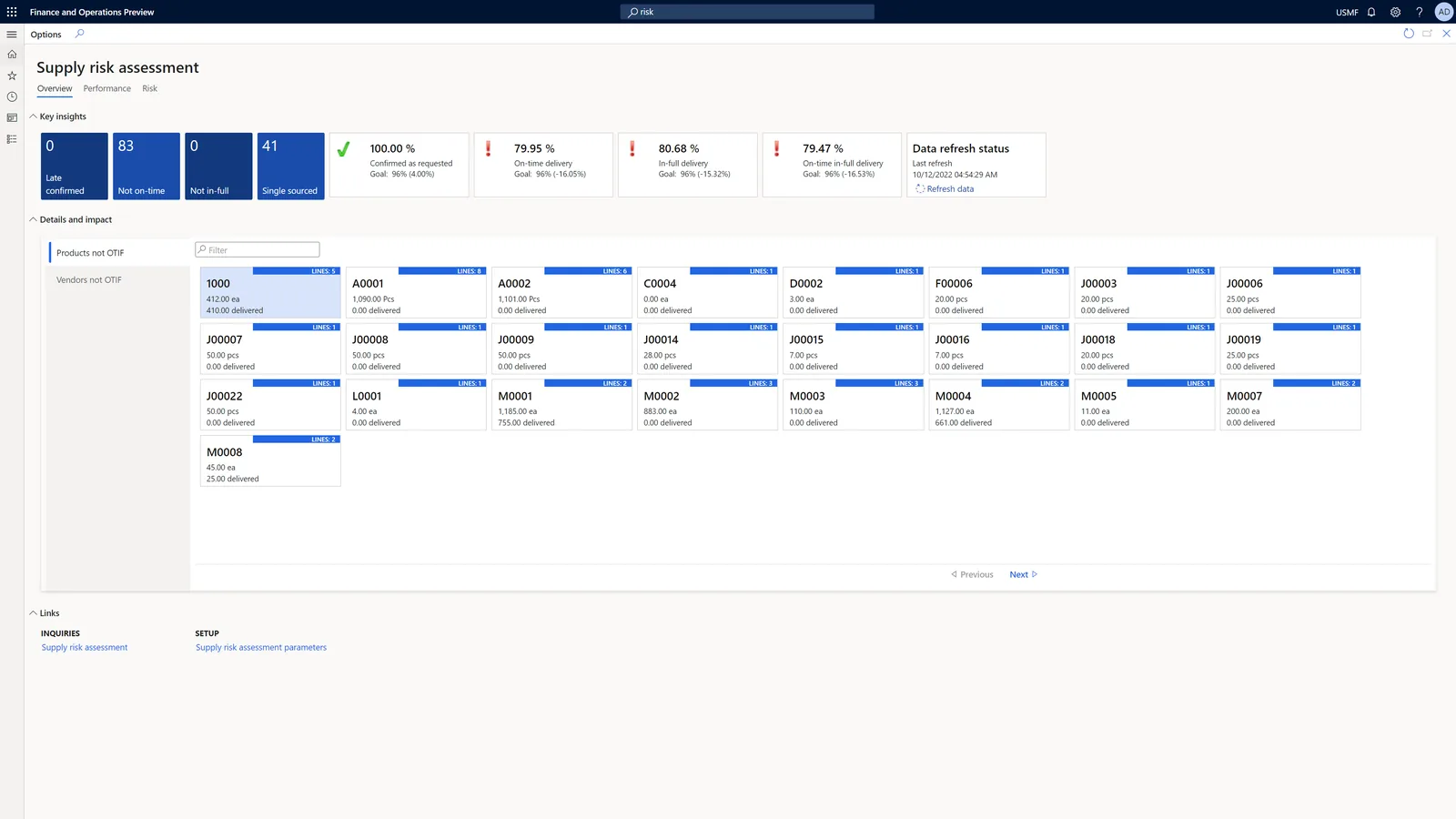
Most risk in this business sits in purchasing and receipt, so that is where the dashboard starts.
We implement Zoho, Odoo, ERPNext, Dynamics 365 and custom ERP, and recommend based on traceability depth and company size.
| Company profile | Usually fits | Why |
|---|---|---|
| Small supplier with a focused product range | Zoho Books with Zoho Inventory and Zoho CRM | Batch tracking, document attachments and tender pipeline at modest cost. |
| Pipes, valves and fittings stockist with heavy traceability | Odoo | Lots, product attributes, quality checks and document management in one system. |
| Lubricant blender and trader | ERPNext or Odoo | Batches, BOMs for blending and unit conversions for drums, IBCs and bulk. |
| Larger supplier with several entities and strict audits | Microsoft Dynamics 365 Business Central | Item tracking, approvals, multi-company and detailed audit trail. |
We do not implement SAP or NetSuite, which some operators use, but we can integrate or exchange documents with customer systems where needed.
We configure the ERP to support these points. Always confirm tax treatment with your tax advisor.
UAE VAT includes a domestic reverse charge for certain supplies of crude or refined oil and natural gas between registered businesses. If your advisor confirms it applies to your sales, we set up separate tax codes and invoice wording.
Many UAE energy buyers consider ICV certificates in tenders. The ERP can report the spend, payroll and supplier data your certifying body asks for; the certificate itself is issued under the ICV program.
Imported pipes, valves and fittings carry customs duty and need origin documents. Landed cost and certificate records are kept per lot.
Invoices to operators and EPC contractors will need PINT AE structured data through an Accredited Service Provider, from 1 January 2027 or 1 July 2027 depending on revenue. Check the latest Ministry of Finance and FTA guidance.
General information, not tax or legal advice. Rules change; confirm current FTA, MOHRE and Ministry of Finance guidance with your advisor.
What suppliers typically gain when traceability and tendering run in one system.
MTCs and inspection reports are already attached to each lot, so delivery packs compile quickly.
Every RFQ has an owner, a deadline and a recorded outcome.
Structured attributes reduce picking the wrong grade or schedule.
Registrations and certificates are renewed before they block a bid.
Typical ranges for a stockist with one main yard. Historic MTC loading can add time.
Durations are typical ranges; your plan is agreed after discovery.
Review item coding, traceability needs, tender process and customer documentation requirements.
Define attributes for size, schedule, grade and standard, and clean the existing item list.
Lots, quality checks, document storage, tender tracking, VAT codes and approvals.
Load stock by heat number with available MTCs and open orders.
Train estimators, storekeepers, QC and accounts, then support the first deliveries.
Related industries, platforms and modules.
We configure the system for the rules UAE businesses report against, and test it before go-live.
General information, not tax or legal advice. Confirm current requirements with the FTA, MOHRE or your advisor. See all UAE compliance guides.
On-site workshops in Dubai, Abu Dhabi and Sharjah, and remote or on-site delivery across the Northern Emirates and free zones.
Official sources and references
Facts on this page were checked against these sources in October 2026. Rules change, so confirm current requirements before acting.
Still have a question? Our consultants are happy to help.
Ask an ExpertYes. When stock is received, the heat or batch number and its MTC are recorded on the lot. Every delivery shows which lots were shipped, so you can retrieve the certificate in seconds.
It can be configured with separate tax codes and invoice wording for reverse charge supplies. Whether the mechanism applies to a specific sale is a tax question, so confirm it with your advisor first.
The ERP holds the financial, payroll and supplier data that ICV assessments use and can produce reports for your certifying body. It does not issue or guarantee an ICV score.
Each product has a base unit with conversions to drums, pails, IBCs and bulk quantities. Where density matters, conversions between volume and weight can be configured per product.
No. That page covers operators and service companies with assets and field operations. This page is for traders and stockists supplying the sector.
Tell us how your business runs today and where it gets stuck. We'll recommend the right platform, outline the implementation approach and give you a realistic timeline, with no obligation.
Dubai, United Arab Emirates