L
O
A
D
I
N
G


Zoho, Odoo, ERPNext, Dynamics 365 and custom ERP, delivered by one accountable team.

If you want invoicing, stock and VAT reporting running this quarter rather than next year, an online ERP subscription is the shortest route. Here is what that route looks like.
Online ERP software in the UAE is a vendor-hosted subscription that lets an SME open an account and start entering data the same day. With a focused scope covering finance, sales, purchases, basic stock and VAT, many SMEs go live in roughly three to six weeks. Common options are Zoho, Odoo Online, ERPNext on Frappe Cloud and Dynamics 365 Business Central.
Online ERP software in the UAE suits a particular kind of buyer: a small or mid-sized company, often under fifty users, that has outgrown spreadsheets or a basic accounting app and needs a working system quickly. A new trading license in IFZA, a second branch opening in Sharjah, or VAT registration that just became mandatory are typical triggers. In these situations a long, heavily customized project is the wrong answer.
An online ERP is sold as a subscription, opened from a web address, and hosted by the vendor. You create an account, choose your apps, and start entering data the same day. What takes time is not installation but decisions: chart of accounts, VAT codes, item lists, opening balances and who approves what. With a focused scope and a partner who has done it many times, many SMEs are invoicing from the new system within a few weeks.
We help UAE businesses take this route with Zoho, Odoo Online, ERPNext on Frappe Cloud and Dynamics 365 Business Central. The steps below describe the quick-start approach we use, and where it stops being the right fit.

Signing up is easy. Getting to a reliable first VAT return is where self-service projects often slow down.
Teams open a free trial, enter a few test invoices and then stop, because nobody owns the setup. The trial expires and the spreadsheets continue.
Default tax codes may not match how your supplies are treated. A misconfigured code on the first invoices means corrections in the first VAT return.
Without verified opening receivables, payables, stock and bank balances, the first reports cannot be trusted and staff lose confidence.
Bundles look attractive, but subscribing to HR, helpdesk and marketing apps before finance is stable adds cost and distraction.
Annual commitments, user minimums and price changes at renewal can surprise owners who only looked at the monthly headline rate.
A quick-start scope covers the processes every UAE SME needs on day one. Everything else waits for phase two.
A UAE-ready chart of accounts, 5% standard, zero-rated and exempt tax codes, and your TRN on invoice templates.
Customers, price lists, quotations and tax invoices in English and Arabic where required, with online payment links if your gateway supports it.
Suppliers, purchase orders, bills and a simple approval rule for spending above a set value.
Item master, one or two warehouses, stock receipts and deliveries linked to orders and invoices.
Bank statement import or feeds where your UAE bank supports them, with reconciliation rules for regular transactions.
Profit and loss, balance sheet, aged receivables and a VAT summary aligned to your EmaraTax return.
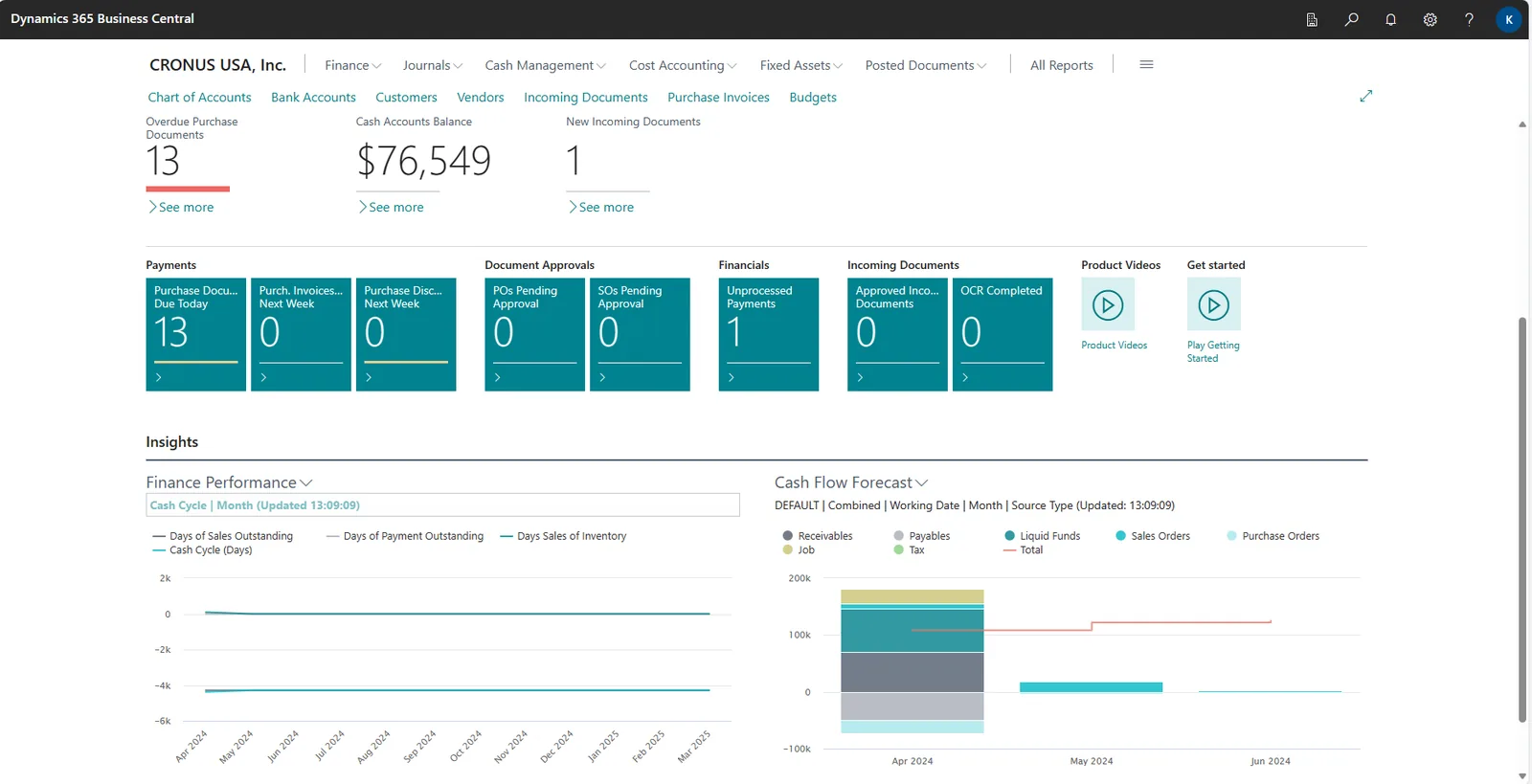
Within weeks of going live, an owner can open one screen and see cash, receivables and sales without asking the accountant to prepare a spreadsheet.
All four can be running within weeks for a focused scope. They differ in how far you can stretch them later. Subscription prices change, so we quote current plans during your consultation rather than listing them here.
| Zoho (Books, Inventory, One) | Odoo Online | ERPNext on Frappe Cloud | Business Central | |
|---|---|---|---|---|
| How you sign up | Self-service with free trial | Self-service with free trial | Self-service site creation on Frappe Cloud | Usually through a Microsoft partner |
| Billing model | Per organization plan or per user, monthly or annual | Per user, monthly or annual, by app plan | Hosting plan; ERPNext itself is open source | Per user per month, licensed through a partner |
| Quick-start strength | Very fast for finance and invoicing | Wide app range in one database | Full ERP at modest hosting cost | Strong finance for growing firms |
| Limit to watch | Deep manufacturing needs other tools | No custom code modules on Odoo Online; move to Odoo.sh for that | Needs more setup knowledge | Longer setup than pure self-service tools |
| Natural next step | Add CRM, People, Analytics | Add MRP, POS, eCommerce | Add HR, payroll, projects | Add Sales, Field Service, Power BI |
A typical quick-start plan for a UAE SME with clean data. Timelines depend on data readiness and how fast decisions are made.
Durations are typical ranges; your plan is agreed after discovery.
Short demo, confirm the app plan, open the production account in your company's name.
Company details, TRN, chart of accounts, tax codes, users, document templates and approval rule.
Import customers, suppliers and items; load and verify opening balances against your last trial balance.
Hands-on sessions per role, first live invoices, then support through the first month-end.
Add modules such as CRM, payroll or projects once finance is stable.
A quick start must not mean a careless one. These items are part of every online ERP setup we do. Confirm your specific VAT treatment with your tax advisor.
Registration is mandatory once taxable supplies exceed AED 375,000 over 12 months (or are expected to in the next 30 days), and voluntary from AED 187,500. The ERP can track turnover so you see the threshold coming.
Taxable income up to AED 375,000 is taxed at 0% and above it at 9%. Small Business Relief may apply to revenue up to AED 3 million for periods ending on or before 31 December 2026. Clean books from day one make either route simpler.
Most SMEs fall under the July 2027 phase, with an Accredited Service Provider to be appointed by 31 March 2027. Choose an online ERP whose vendor or partner has a clear PINT AE plan, and check the latest Ministry of Finance / FTA guidance.
General information, not tax or legal advice. Rules change; confirm current FTA, MOHRE and Ministry of Finance guidance with your advisor.
Benefits SMEs commonly describe once their online ERP is running.
Sales staff create compliant tax invoices from the order instead of waiting for accounts to type them.
Subscription billing replaces server purchases and large license fees, spreading cost across the year.
Tax codes on every transaction mean the quarterly VAT summary is a report, not a reconciliation project.
New apps, users and branches are added to the same subscription when the business is ready.
Compare platforms, costs and small business options before you subscribe.
We configure the system for the rules UAE businesses report against, and test it before go-live.
General information, not tax or legal advice. Confirm current requirements with the FTA, MOHRE or your advisor. See all UAE compliance guides.
On-site workshops in Dubai, Abu Dhabi and Sharjah, and remote or on-site delivery across the Northern Emirates and free zones.
Official sources and references
Facts on this page were checked against these sources in October 2026. Rules change, so confirm current requirements before acting.
Still have a question? Our consultants are happy to help.
Ask an ExpertFor a focused scope covering finance, sales, purchases and basic stock, many SMEs go live in roughly three to six weeks. The main variables are how clean your customer, supplier and item lists are and how quickly opening balances are confirmed.
You pay the vendor monthly or annually, usually per user or per organization plan, sometimes with add-ons for extra apps or transactions. Annual plans are often discounted but commit you for the year. Implementation services from a partner are billed separately.
Often yes, since most trials convert to paid accounts. We still recommend clearing test transactions before go-live and loading real opening balances, so your first VAT period starts clean.
Anything not needed to invoice, buy, track stock and file VAT. Payroll, CRM automation, helpdesk and advanced manufacturing are better added once finance is stable. Our small business ERP guide covers phasing.
Each platform has a next step: Odoo Online can move to Odoo.sh for custom modules, ERPNext can move to self-hosting, and Zoho apps can be combined into Zoho One. Planning this at the start avoids a second migration.
Related Solutions
Related Industries
Related ERP Platforms
Tell us your processes and deadline, and we will propose a quick-start scope and platform for your business.
Dubai, United Arab Emirates