L
O
A
D
I
N
G


Zoho, Odoo, ERPNext, Dynamics 365 and custom ERP, delivered by one accountable team.

Most UAE IT companies sell boxes, licences, projects and support contracts to the same customer. We help you run all four from one system.
A UAE IT company that resells hardware and licences, delivers projects and sells AMCs needs an ERP that puts all four on one quotation, tracks serial numbers and warranties from distributor to customer site, runs recurring contracts with renewal alerts, and checks helpdesk tickets against contract coverage and SLA. Zoho, Odoo, ERPNext and Dynamics 365 can each be configured for this mix.
An ERP for IT companies in the UAE must handle a business that is part trader, part contractor and part service provider. A typical system integrator or managed service provider in Dubai or Abu Dhabi quotes servers and firewalls, resells software subscriptions, installs and configures them as a project, then signs an annual maintenance contract (AMC) or managed services agreement for ongoing support.
Each of those revenue streams needs different controls. Hardware needs serial numbers, warranties and distributor pricing. Licences need renewal dates and reseller margins. Projects need timesheets and milestone billing. Support contracts need SLAs, ticket tracking and recurring invoices. When these sit in separate tools, account managers miss renewals and engineers work on tickets for customers whose contracts have expired.
We implement Odoo, Zoho, ERPNext and Dynamics 365 Business Central for IT solution providers, connecting quotation, procurement, delivery, project work and support. Companies that build and sell their own software products have different needs; see our ERP for software companies page for that model.
These are the issues IT directors and finance managers bring to us most often.
Renewal dates live in spreadsheets or vendor portals. When reminders are missed, customers lapse or buy elsewhere, and recurring revenue is lost.
Hardware shipped directly from distributors to customer sites often skips serial capture. Warranty claims and RMA processes then rely on guesswork.
Engineers resolve tickets for customers whose AMC has expired or who are not covered for that device. That free work is rarely billed.
Implementation projects mix product margin and services margin. Without separate tracking, a profitable hardware sale can hide a loss-making deployment.
Special pricing from vendors depends on deal registration and quote validity. Losing track of which price applies leads to quoting errors.
We configure the full cycle an IT company runs for each customer.
One shared database: every step updates stock, finance and reports in real time.
We combine trading, project and service modules so the customer record ties everything together.
Opportunities by vendor and technology, with quotes that combine products, services and contracts.
Purchase orders to distributors, special bid pricing and expected delivery tracking.
Serial and warranty capture on receipt and delivery, including drop-shipped items.
Implementation tasks, engineer timesheets and milestone billing for deployments.
Recurring contracts for support, managed services and licences with automatic invoicing and renewal alerts.
Tickets from email or portal, checked against contract coverage, with response and resolution targets.
On-site visits scheduled and recorded with parts used and customer sign-off.
Margin by revenue stream: hardware, licences, services and recurring contracts.
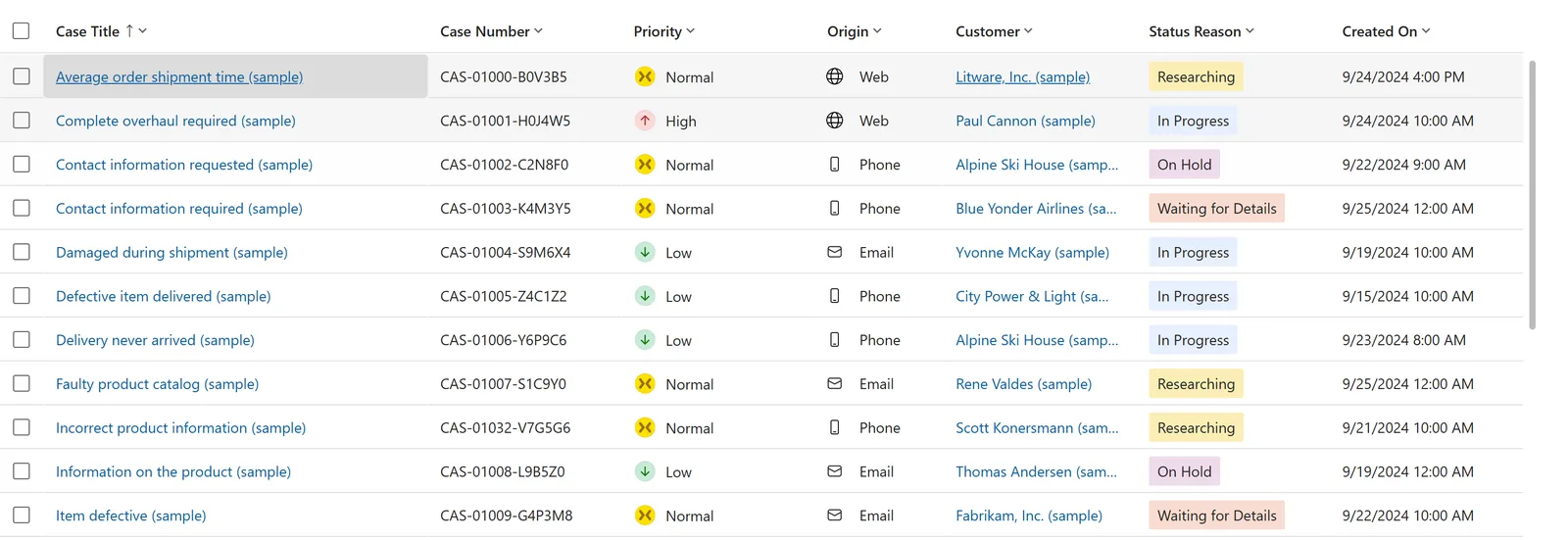
Service managers see ticket load and SLA status; leadership sees recurring revenue at risk.
The balance between trading, projects and services drives the choice.
| IT company profile | Why it fits | Watch-outs | |
|---|---|---|---|
| Odoo (CRM, Sales, Inventory, Project, Helpdesk, Subscriptions) | System integrators with all four revenue streams | Serial tracking, subscriptions, helpdesk with SLA and project timesheets in one database | Several apps means careful licence planning |
| Zoho (CRM, Books, Inventory, Desk, Projects) | Smaller resellers and support providers | Zoho Desk for SLAs, Inventory with serials, affordable suite | Linking contracts to ticket coverage needs configuration |
| ERPNext | Technical teams wanting open source and control | Serial numbers, maintenance schedules, projects and support built in | Partner support needed for upgrades and hosting |
| Dynamics 365 Business Central | Larger IT distributors and integrators | Strong inventory, purchasing and multi-company finance; service management options | Higher cost; best where trading volume is significant |
| Custom ERP | MSPs with unique monitoring or billing integrations | Tailored to your RMM and billing logic | Longer build and maintenance responsibility |
We do not implement NetSuite or SAP. IT companies moving from those or from QuickBooks or Tally can migrate their data to one of the platforms above.
Confirm specific tax treatments with your tax advisor; we configure the system to apply their guidance.
Hardware, licences and services sold to UAE customers are generally standard-rated at 5%. Each line on a tax invoice needs the correct tax treatment and your TRN must appear on the invoice.
Licences and cloud services bought from overseas vendors may require the reverse charge mechanism. Supplier tax settings help apply this consistently.
Hardware imported directly may involve customs duty and import VAT. Landed cost should be captured so product margins are accurate.
B2B invoices will fall under the UAE e-invoicing phases from 2027, so check the latest Ministry of Finance and FTA guidance. Engineers' salaries must be paid through WPS with a Salary Information File.
General information, not tax or legal advice. Rules change; confirm current FTA, MOHRE and Ministry of Finance guidance with your advisor.
Qualitative outcomes, not promised figures.
Contract and licence expiry dates trigger reminders well before lapse.
Tickets from uncovered customers are flagged for quotation or chargeable support.
Serial numbers link each device to its purchase, customer and warranty period.
Leadership sees whether hardware, licences, projects or contracts drive profit.
Ranges assume a single entity with trading and service operations.
Durations are typical ranges; your plan is agreed after discovery.
We review your product lines, distributors, contract types, helpdesk process and current tools.
Quote templates, serial rules, contract structures and SLA policies are designed.
Customers, active contracts with renewal dates, serialized stock and open tickets are migrated.
End-to-end tests from quote to renewal, including drop-ship deliveries and ticket coverage checks.
Cutover with training for sales, engineers, support desk and finance.
Related industries, platforms and modules for IT businesses.
We configure the system for the rules UAE businesses report against, and test it before go-live.
General information, not tax or legal advice. Confirm current requirements with the FTA, MOHRE or your advisor. See all UAE compliance guides.
On-site workshops in Dubai, Abu Dhabi and Sharjah, and remote or on-site delivery across the Northern Emirates and free zones.
Official sources and references
Facts on this page were checked against these sources in October 2026. Rules change, so confirm current requirements before acting.
Still have a question? Our consultants are happy to help.
Ask an ExpertYes. We set up quotation templates with sections for each type. On confirmation, the system creates the purchase, delivery, project and contract records needed for each line.
Serials can be captured when the distributor confirms shipment or when engineers install the device. Either way, the serial links to the customer, sale and warranty dates.
Yes. Tickets are linked to the customer's active contracts and, where needed, to specific devices. Uncovered tickets are flagged so the team can quote or bill the work.
Often yes, where those tools offer an API. We commonly bring alerts into the helpdesk or push usage data into billing. The scope depends on the specific tool.
Yes. We do not implement QuickBooks, but we regularly migrate customers, suppliers, items, open balances and history from it into Zoho, Odoo, ERPNext or Dynamics 365.
Yes. Our office is in Dubai and we serve IT companies across all emirates on-site and remotely.
Related Solutions
Related Industries
Related ERP Platforms
Tell us your revenue mix and current tools, and we will outline a practical rollout plan.
Dubai, United Arab Emirates