L
O
A
D
I
N
G


Zoho, Odoo, ERPNext, Dynamics 365 and custom ERP, delivered by one accountable team.

Odoo works best when orders, payments and shipments flow into it automatically. We design, build and monitor the integrations that keep your Odoo database the single source of truth.
Odoo integration in the UAE uses three routes: native connectors for some payment providers and bank statement imports, modules from the Odoo Apps store, and custom work through Odoo's external API, scheduled actions or webhooks. Common links include Shopify, WooCommerce, Amazon.ae, Noon, couriers, biometric attendance devices and an Accredited Service Provider for PINT AE e-invoicing, with error queues so failed syncs are seen the same day.
Odoo integration UAE projects start when a team notices how much time goes into copying data. Orders from Shopify or Noon are typed into Odoo, courier tracking numbers are pasted from a portal, bank statements are downloaded and uploaded by hand, and attendance from a biometric device is reconciled in Excel before payroll. Each manual step adds delay and errors.
Odoo offers several ways to connect. Some links are native, such as certain payment providers and bank statement imports. Others use connector modules from the Odoo Apps store or written by us. For anything bespoke, Odoo's external API lets another system read and write records, and Odoo can call outside services through scheduled actions or webhooks. Choosing the right method for each link matters more than the tool itself.
A new requirement makes integration urgent for many UAE businesses: e-invoicing. Under the Peppol-based model, invoices will be exchanged through Accredited Service Providers, so Odoo must send structured invoice data to the ASP you appoint. We cover that and the everyday links on this page. For platform-neutral advice see ERP API integration.
The products we configure, integrate and support on projects like this one.
 Odoo Invoicing / Accounting
 Odoo Sales
 Odoo CRM
 Odoo Inventory
 Odoo Purchase
 Odoo Manufacturing
Product names and logos are trademarks of their respective owners and are shown only to identify the software we implement.
These are the problems that turn a promising connector into a daily headache.
Every web order creates a new customer, and marketplace SKUs do not match Odoo product codes. Reports split one customer into many and stock levels drift.
The online store calculates VAT-inclusive prices one way and Odoo another, leaving small rounding differences on every invoice that pile up in the VAT return.
A connector stops after a password change or an API version update. Nobody notices for days until a customer asks where their order is.
Stock levels sync once a day, so fast-moving items sell out in Odoo but stay available on the website or marketplace.
Invoice data is incomplete: missing buyer TRN, unclear item descriptions or wrong tax categories. These gaps must be fixed in Odoo before an ASP connection can work.
Each integration follows the same path, whether it is a bank feed or a multi-marketplace order sync.
We document which system owns each record, what triggers a sync, which direction it runs and how often, for example orders inbound every few minutes and stock outbound on every change.
Native feature, existing connector module or custom API integration, compared for cost, reliability and upgrade impact.
Customer, product, tax and payment method mappings are defined so records match instead of duplicating.
Every sync writes a log. Failures land in an error queue in Odoo with the reason and a retry option, and alerts go to a named person.
We run real scenarios, such as a web order with a discount code, a partial refund and a return, through every connected system before go-live.
These outputs make the integration supportable long after the project ends.
Single, well-supported connectors can be live in days. Multi-system projects take longer. These ranges assume the other system has a usable API and documentation.
Durations are typical ranges; your plan is agreed after discovery.
Workshops, data flow diagram and field mapping signed off.
Configuration or development, logging and error handling.
End-to-end scenarios with your operations and finance users.
Close watch on logs and error queues, then handover to support.
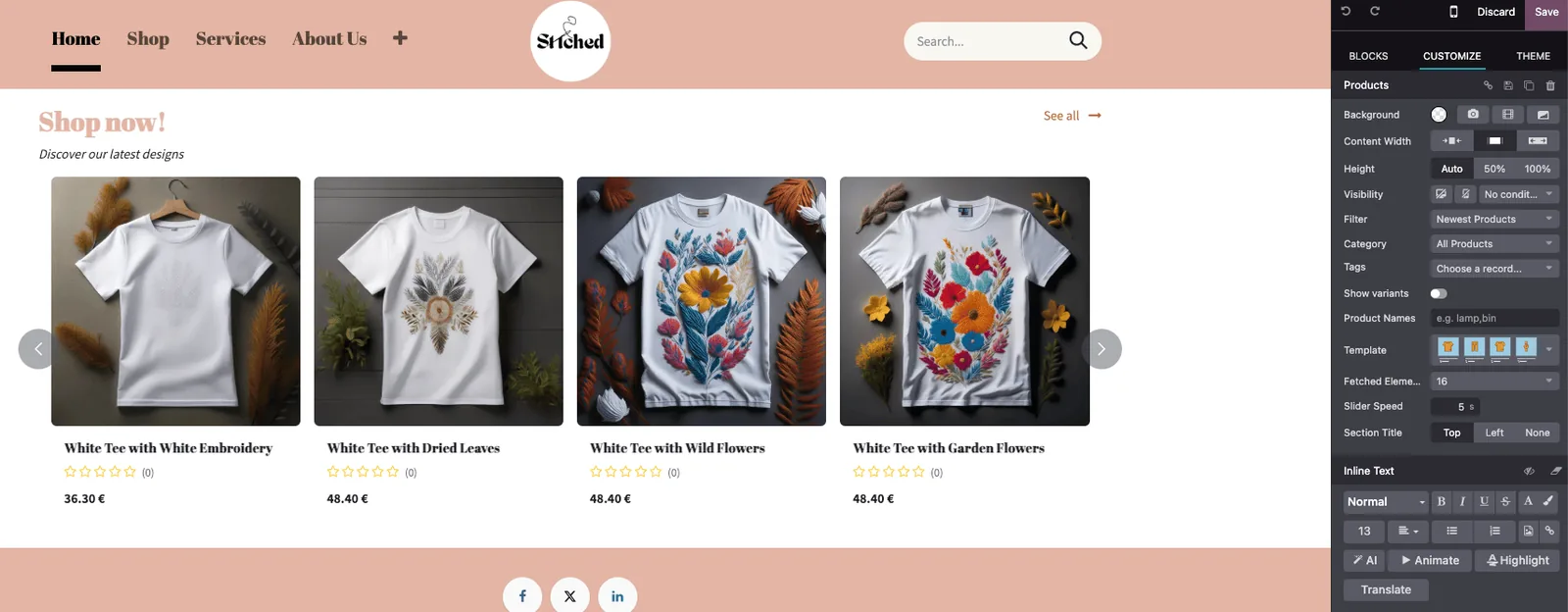
For retailers and distributors selling online, the most visible integration is the order feed. Once connected, the operations team sees every channel in one Odoo view.
Described as practical outcomes, not invented percentages.
Orders, payments and statements arrive in Odoo automatically, freeing staff for exceptions.
Frequent stock sync reduces overselling across the website and marketplaces.
Consistent tax mapping across channels makes the VAT return easier to prepare and check.
Structured, complete invoice data in Odoo makes the ASP connection a configuration task rather than a clean-up project.
More on connecting Odoo and preparing for e-invoicing.
We configure the system for the rules UAE businesses report against, and test it before go-live.
General information, not tax or legal advice. Confirm current requirements with the FTA, MOHRE or your advisor. See all UAE compliance guides.
On-site workshops in Dubai, Abu Dhabi and Sharjah, and remote or on-site delivery across the Northern Emirates and free zones.
Official sources and references
Facts on this page were checked against these sources in October 2026. Rules change, so confirm current requirements before acting.
Still have a question? Our consultants are happy to help.
Ask an ExpertAlmost any system with an API or file export. Common UAE examples are Shopify, WooCommerce, Amazon.ae, Noon, payment gateways, courier platforms, bank statement formats, biometric attendance devices and BI tools. We confirm the method once we see the other system's documentation.
Invoices will be exchanged through an Accredited Service Provider using the PINT AE specification. We map Odoo invoice data to the required fields and connect to the ASP you appoint, either through a connector or the ASP's API. Check the latest Ministry of Finance and FTA guidance for your deadline.
If a maintained module covers your needs and your Odoo version, buying it is usually cheaper. We review its code quality, support history and upgrade path first. Custom work makes sense when your rules are specific or no reliable module exists.
Odoo can import bank statements in standard formats, and some banks offer direct feeds or host-to-host connections that need separate arrangements with the bank. We help you choose the practical option for your bank.
We set up error queues and alerts to a named person in your team, and our Odoo support plans can include integration monitoring and fixes.
Related Solutions
Related Industries
Related ERP Platforms
List the systems you want connected to Odoo and we will propose the method, effort and monitoring plan for each link.
Dubai, United Arab Emirates