L
O
A
D
I
N
G


Zoho, Odoo, ERPNext, Dynamics 365 and custom ERP, delivered by one accountable team.

Odoo eCommerce puts your web shop, stock, invoicing and delivery in one system, so an order placed at midnight is ready to pick in the morning with no copy-paste.
Yes. Odoo eCommerce runs a web shop on the same database as Odoo Sales, Inventory and Accounting, so product pages show real stock and confirmed orders flow straight to picking, invoicing and delivery. For UAE sellers it supports a bilingual English and Arabic storefront with right-to-left layout, AED prices including 5% VAT, B2B price lists and online payment at checkout.
Odoo Ecommerce UAE projects suit businesses that already feel the pain of running a web shop separately from operations. Orders come in on one platform, stock lives in another, and someone exports a CSV every morning so the warehouse can pick. Overselling during a sale weekend or a White Friday promotion is common. Odoo eCommerce is built on the same database as Sales, Inventory and Accounting, so the product page shows what is really on the shelf.
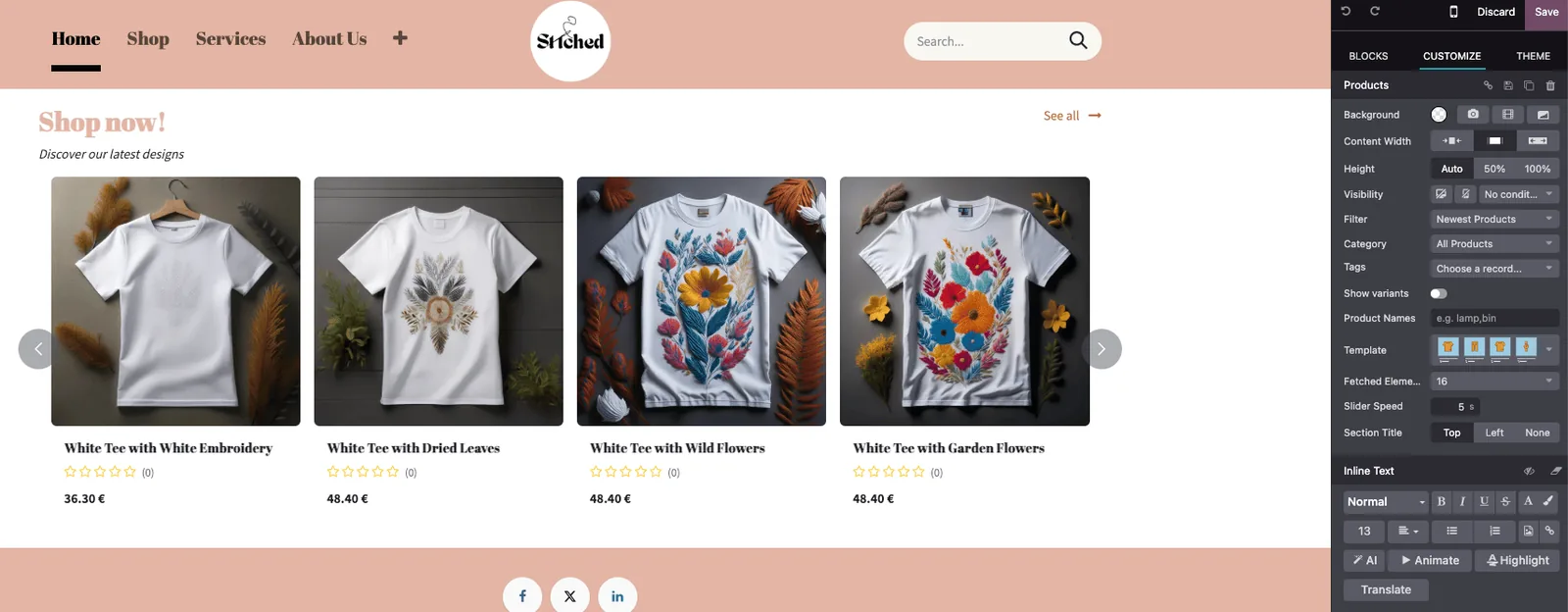
The Odoo Website builder lets your team edit pages, banners and product descriptions with drag-and-drop blocks, in English and Arabic with right-to-left layout. Products carry variants, images, specifications and price lists. Checkout supports guest and registered customers, delivery methods and online payment, and every confirmed order becomes a sales order that Inventory can pick right away.
We set up Odoo eCommerce for D2C brands, distributors selling to trade customers online, and retailers who also use Odoo POS in their stores. If you are deciding between platforms, see our broader ecommerce ERP UAE page, or Odoo for ecommerce businesses for the full company setup.

The products we configure, integrate and support on projects like this one.
 Odoo eCommerce
 Odoo Invoicing / Accounting
 Odoo Sales
 Odoo CRM
 Odoo Inventory
 Odoo Purchase
Product names and logos are trademarks of their respective owners and are shown only to identify the software we implement.
Marketing and operations look at the same numbers: what sold online, what is stuck in fulfilment and which carts were abandoned.
This is the default path for a B2C order. B2B customers often skip online payment and buy on credit terms through the portal.
One shared database: every step updates stock, finance and reports in real time.
We focus configuration time on the parts that affect conversion, fulfilment and tax accuracy.
Drag-and-drop pages, landing pages for campaigns and SEO fields for titles, descriptions and URLs.
Variants such as size and color, attribute filters, rich descriptions and multiple images per product.
Price lists by customer group, coupon codes, free shipping thresholds and time-limited offers.
Guest checkout, saved addresses and a choice of payment providers configured for UAE card payments.
Flat rates, rates by emirate or weight, and click-and-collect from a store or warehouse.
Trade customers log in, see their own prices and credit terms, reorder and download invoices.
Run separate storefronts for different brands or countries from one Odoo database and one stock pool.
Order history, returns requests and wishlists for registered shoppers, linked to their CRM record.
Odoo has built-in connectors for several international payment providers and carriers. Local gateways, couriers and marketplaces often need a connector or custom development, which we scope honestly at the start through our Odoo integration team.
Online selling raises a few UAE-specific tax questions. We configure Odoo to support the rules; please confirm the treatment of your sales with your tax advisor.
Consumer prices are typically displayed with 5% VAT included. Odoo can show tax-included prices to B2C shoppers and tax-excluded prices to logged-in trade customers.
Invoices generated from web orders carry your TRN, the customer details and the VAT breakdown, and can be sent automatically once the order is paid or delivered.
If you ship outside the UAE, fiscal positions can apply the right tax treatment by destination country, subject to holding the export evidence your advisor requires.
B2B invoices will move to the PINT AE e-invoicing model through Accredited Service Providers, mandatory from 1 January 2027 for businesses with AED 50 million or more in revenue and from 1 July 2027 for others. Check the latest Ministry of Finance and FTA guidance as dates have changed before.
General information, not tax or legal advice. Rules change; confirm current FTA, MOHRE and Ministry of Finance guidance with your advisor.
Lessons from UAE store launches that save weeks of rework.
Explore other Odoo apps and ecommerce resources for UAE sellers.
We configure the system for the rules UAE businesses report against, and test it before go-live.
General information, not tax or legal advice. Confirm current requirements with the FTA, MOHRE or your advisor. See all UAE compliance guides.
On-site workshops in Dubai, Abu Dhabi and Sharjah, and remote or on-site delivery across the Northern Emirates and free zones.
Official sources and references
Facts on this page were checked against these sources in October 2026. Rules change, so confirm current requirements before acting.
Still have a question? Our consultants are happy to help.
Ask an ExpertYes. Odoo supports Arabic with right-to-left layout, and each page and product can be translated. You still need properly written Arabic content, which we recommend preparing with a native copywriter rather than machine translation.
Odoo includes connectors for several international providers. Some UAE-based gateways are available through third-party modules or need custom integration. We check which gateway your bank or business already uses and confirm the effort before committing.
Yes, as long as orders from marketplaces are brought into Odoo so stock is shared. Some marketplaces have connectors, and others need an integration built against their seller API.
It works well for B2B. Trade customers can log in to see their own price list, order on credit terms, reorder past items and download invoices, which reduces phone and WhatsApp orders for your sales team.
Shopify has a larger theme and app ecosystem for pure online retail. Odoo is stronger when you also need inventory, purchasing, accounting and POS in one system. Many businesses choose based on how much back-office work the store generates.
A store using a standard theme with a clean product catalog often launches in 6 to 10 weeks. Custom design, marketplace integrations or large catalogs with complex variants add time.
Tell us how your business runs today and where it gets stuck. We'll recommend the right platform, outline the implementation approach and give you a realistic timeline, with no obligation.
Dubai, United Arab Emirates