L
O
A
D
I
N
G


Zoho, Odoo, ERPNext, Dynamics 365 and custom ERP, delivered by one accountable team.

A custom ERP is a software asset your company owns. This page explains what goes inside it, which technologies it is built on, and what it takes to keep it healthy for years.
Custom ERP software in the UAE is a business asset you own and must run for years, so before signing you should settle which modules it contains, which stack it uses, who holds the source code and IP, where it is hosted and who maintains it. Building on an open framework such as Frappe or Odoo keeps a proven accounting core under your custom processes.
Most conversations about custom ERP software in the UAE start with the build: requirements, sprints, go-live. We cover that on our Custom ERP Development page. This page looks at the other side: the finished product. Once the system is live, you are the owner of a piece of business software that has to run every day, pass audits, absorb new tax rules and survive staff turnover.
A custom ERP is software written for one company's way of working. It may be built entirely from scratch, or it may be built on an open framework such as Frappe (the framework behind ERPNext) or Odoo's module system, where the custom code sits on top of a proven accounting and inventory core. Either way, the questions you should ask are the same: what modules does it contain, what stack is it written in, who holds the source code and intellectual property, where is it hosted, and who will maintain it in year three.
UAE ERP Experts builds and supports custom ERP software from our Dubai office for companies across all seven emirates. We are also a Zoho Premium Partner, an Odoo Official Partner, a Microsoft Partner for Dynamics 365 and an ERPNext / Frappe partner, so we can tell you honestly when a packaged platform with light customization is the better buy.

The risks of custom ERP software rarely appear on launch day. They show up later, when the original developer has moved on or the business has changed.
Some contracts license the software to you while the developer keeps the source code. If the relationship ends, you may be unable to change a single invoice layout.
Pricing rules, approval limits and costing methods often live only in code. Without technical and functional documentation, every change becomes a reverse-engineering exercise.
Programming languages, frameworks and libraries release new versions and retire old ones. A custom ERP left untouched for several years can end up on unsupported components with known security issues.
Servers set up on a developer's personal cloud account, with no backup policy and no named administrator, are a common finding in our ERP audits.
With packaged software the vendor updates VAT or e-invoicing features. With custom ERP software, your team or your support partner must design, build and test every regulatory change.
Every custom ERP is different, but the well-built ones share a common skeleton. These are the layers we expect to see, and the ones we deliver.
Chart of accounts, journals, receivables, payables, bank reconciliation and VAT reporting with TRN fields on tax invoices. This is the part most worth building on a proven framework rather than from zero.
Sales, purchasing, inventory, projects or production, shaped around your documents and approval chain rather than a generic template.
Role-based access down to field and document level, plus an audit trail recording who created, edited or approved each record.
Documented REST APIs and webhooks so banks, e-commerce stores, payroll providers and future e-invoicing service providers can connect.
Standard financial statements, operational reports and a dashboard, ideally with a read-only reporting database so heavy queries do not slow daily work.
Architecture diagram, data dictionary, deployment guide and user manuals. Without these, the code is much harder for anyone else to take over.
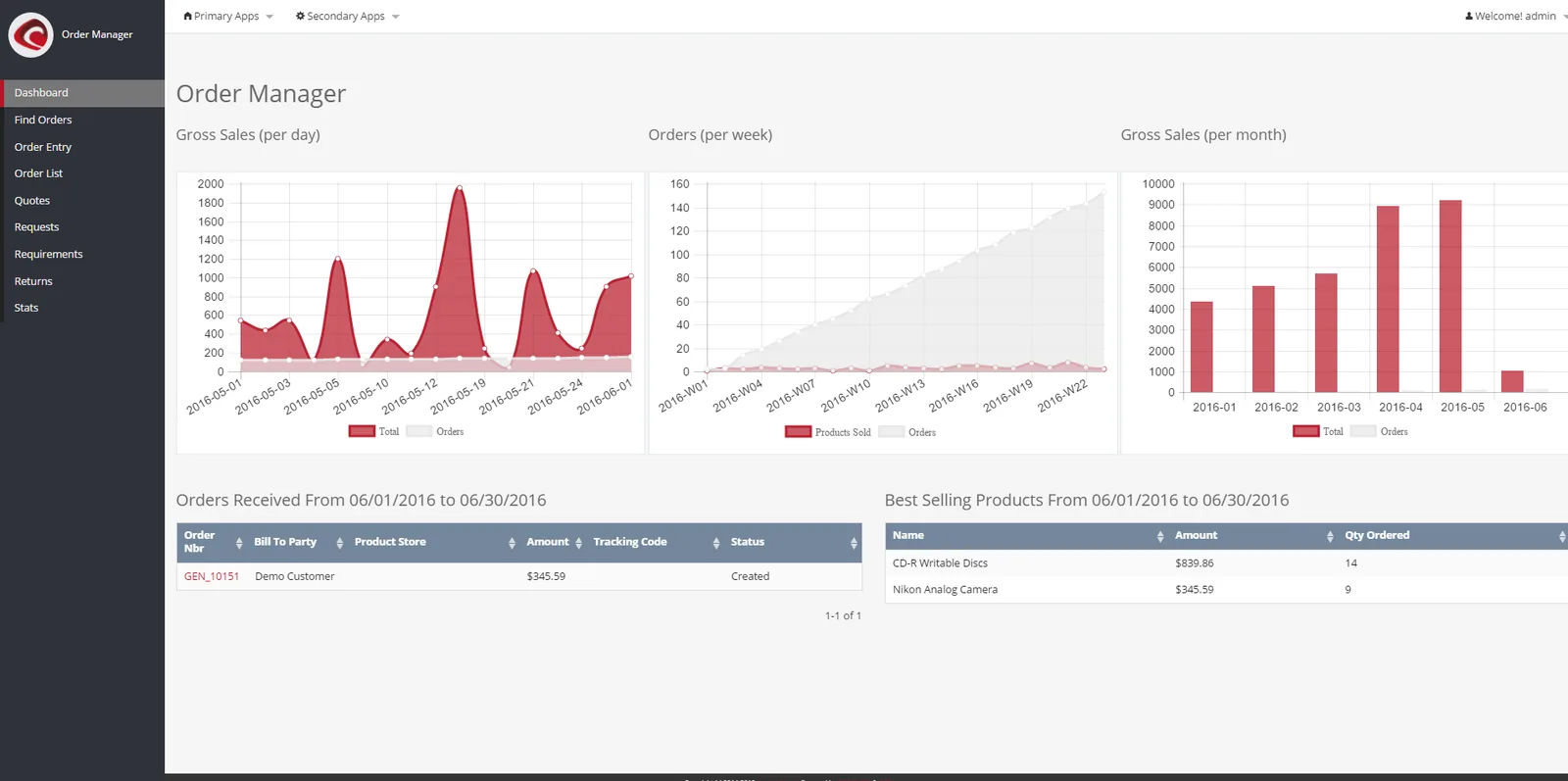
Because the reporting layer is yours, the dashboard shows the figures your management actually asks for, not a vendor's default set.
The stack decides who can maintain your system later. We favor mainstream, well-documented technologies with a large pool of developers in the UAE and the wider region.
| Framework-based (Frappe / Odoo) | Fully custom (e.g. Python, .NET, Node.js) | Low-code (Zoho Creator / Power Apps) | |
|---|---|---|---|
| Accounting core | Inherited, tested and maintained by the framework community | Must be designed and tested by your team | Usually connected to a separate accounting app |
| Speed to first release | Faster, because standard modules exist | Slowest, everything is built | Fast for focused apps |
| Design freedom | High, within framework conventions | Complete | Moderate, limited by the platform |
| Code ownership | Your custom modules are yours; framework stays under its open-source license | Can be fully yours if the contract says so | Your app logic is yours; the platform remains the vendor's |
| Upgrade path | Follow framework releases; custom code needs testing each time | You decide; you also carry all the work | Vendor upgrades the platform automatically |
| Talent availability | Specialist but growing | Large pool of general developers | Platform-specific skills |
| Best suited to | Companies needing standard finance plus unusual operations | Unique processes where no platform fits | Departmental tools and extensions of an existing ERP |
Odoo Community and ERPNext are open source under their respective licenses; Odoo Enterprise, Zoho and Power Apps are subscription products.
Ownership is a long-term commitment. These phases are typical; actual effort depends on system size and how fast your business changes.
Durations are typical ranges; your plan is agreed after discovery.
Bug fixes, small usability changes and first month-end close support while users settle in.
Repository access, deployment scripts, credentials vault and documentation formally transferred to you.
Security patches, library updates, backup restore tests and performance checks.
Changes for VAT, corporate tax reporting or e-invoicing data fields, scoped and tested before deadlines.
Major framework or language version upgrades, planned as a small project rather than an emergency.
Custom code means compliance features are built, not bought. These are the areas we design in from the start. Confirm the treatment for your business with your tax advisor.
Invoice templates carrying the TRN and the prescribed fields, 5% standard-rated, zero-rated and exempt codes, and a VAT return report that maps to the EmaraTax return boxes.
A chart of accounts and tagging that separate non-deductible expenses and, for free zone entities, qualifying and non-qualifying income, to support Federal Decree-Law No. 47 of 2022 filings.
UAE e-invoicing uses the Peppol PINT AE specification through Accredited Service Providers, mandatory from 1 January 2027 for businesses with revenue of AED 50 million or more and from 1 July 2027 for others. A custom ERP needs a structured invoice export and an ASP connection; check the latest Ministry of Finance / FTA guidance.
Immutable logs of posted transactions and secure, long-term storage of records so auditors and the FTA can trace any figure back to its source.
General information, not tax or legal advice. Rules change; confirm current FTA, MOHRE and Ministry of Finance guidance with your advisor.
These are the practical benefits companies report when custom ERP software is owned and maintained properly.
With source code, documentation and hosting in your name, another developer can take over without starting from scratch.
Processes fit the software, so staff stop keeping side spreadsheets to cover gaps.
A planned maintenance cycle replaces emergency fixes when a library or server reaches end of life.
A clean integration layer makes it simpler to add an ASP connection or new tax fields when rules change.
Compare build options, see the development process, or explore platforms that can be extended instead.
We configure the system for the rules UAE businesses report against, and test it before go-live.
General information, not tax or legal advice. Confirm current requirements with the FTA, MOHRE or your advisor. See all UAE compliance guides.
On-site workshops in Dubai, Abu Dhabi and Sharjah, and remote or on-site delivery across the Northern Emirates and free zones.
Official sources and references
Facts on this page were checked against these sources in October 2026. Rules change, so confirm current requirements before acting.
Still have a question? Our consultants are happy to help.
Ask an ExpertOwnership depends entirely on your contract. In our engagements, custom code written for you is assigned to you, delivered in a repository you control. Where we build on an open-source framework such as Frappe or Odoo Community, the framework itself stays under its own license, which you are free to use.
Rarely in full. Accounting, tax reporting and inventory valuation are well solved by existing frameworks. Building your unique processes on top of a proven core usually costs less to maintain and reduces risk in the parts auditors care about most.
Options include a public cloud region in the UAE (several major providers operate local data centers), a managed cloud account in your name elsewhere, or on-premise servers. We recommend the hosting account is registered to your company, with named administrators and tested backups.
Through a support agreement covering security patches, library and framework updates, backups, monitoring and small enhancements. Regulatory changes such as e-invoicing are usually scoped separately. See our ERP maintenance services for how we structure this.
Yes, if the source code and database are available. We start with a code and infrastructure review, document what exists, fix urgent risks and then agree a maintenance plan. Our ERP rescue service covers this situation.
Related Solutions
Related Industries
Related ERP Platforms
Talk to our Dubai team about stack, code ownership, hosting and maintenance before you sign a development contract.
Dubai, United Arab Emirates