L
O
A
D
I
N
G


Zoho, Odoo, ERPNext, Dynamics 365 and custom ERP, delivered by one accountable team.

For companies that run vans, pickups, buses or staff cars as part of the business, we bring every vehicle cost and renewal date into the ERP.
Fleet management software in the UAE, built into an ERP, records what each van, pickup, bus or staff car costs, who drives it and when its documents expire. It imports Salik tolls in Dubai, Darb in Abu Dhabi and traffic fines, matching them by plate and date to the assigned driver, and tracks fuel, maintenance and registration renewals per vehicle.
Fleet management software UAE businesses need is often not a transport company's dispatch system. It is the record of what each vehicle costs and whether it is legal to drive. A contracting firm with forty pickups, a facility management company with service vans, a distributor with delivery trucks and a manpower supplier with labour buses all face the same questions: which vehicles cost the most, who was driving when that fine was issued, and which registration expires next month.
In the UAE those questions have local answers. Salik tolls in Dubai and Darb in Abu Dhabi add charges every day. Traffic fines arrive against the plate, not the driver. Registration renewal needs valid insurance and a passed inspection. Fuel prices change monthly. Without a system, these costs land in a general expense account and nobody can say what a vehicle really costs per month.
We set up vehicle records, driver assignment, fuel and service logs, toll and fine allocation and renewal reminders inside Odoo, ERPNext, Dynamics 365 or Zoho, then post the costs to the right project, branch or department. If you run a transport or logistics business where vehicles are the product, our ERP for fleet management companies page covers trip billing and dispatch.
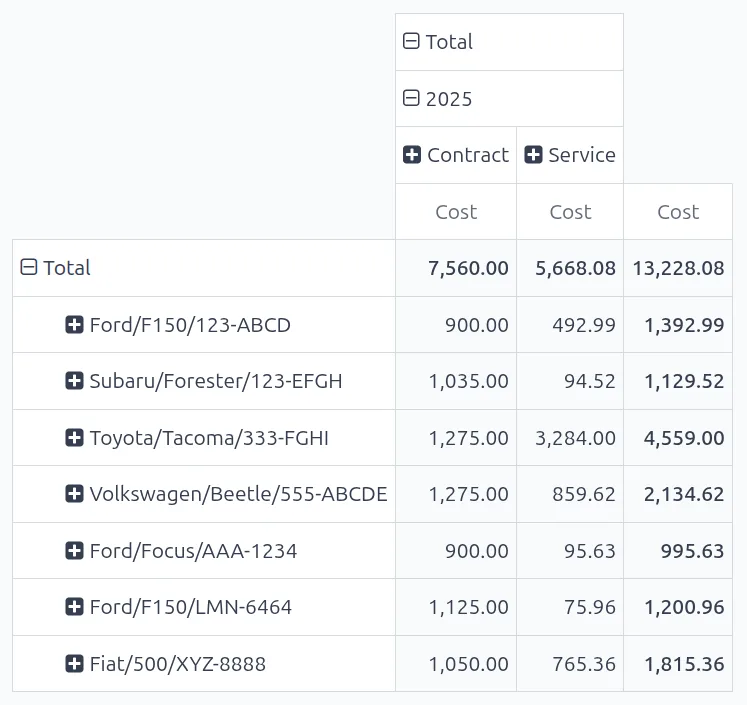
Fleet or admin managers see what each vehicle costs and what needs attention this week.
The full lifecycle runs through purchasing, assets, operations and finance. Keeping it in one system means the history stays with the vehicle.
One shared database: every step updates stock, finance and reports in real time.
These features cover the daily administration of a company fleet. Live GPS tracking stays with a telematics provider; we bring its data into the ERP.
Plate number, emirate of registration, chassis number, model year, ownership or lease details and attached documents for every vehicle.
Who had which vehicle on which dates. When a fine or toll arrives for a plate and time, the system points to the responsible driver.
Imported Salik, Darb and traffic fine statements matched to vehicles and drivers. Recoverable amounts can feed payroll deductions where policy allows.
Planned services by kilometres or months, repair jobs with workshop invoices, and parts used. Overdue services show on the dashboard.
Registration, insurance, inspection and lease end dates trigger reminders to the admin team well before they lapse.
Fuel, tolls, service, insurance and depreciation brought together so you can compare owning, leasing and replacing vehicles.
Native fleet features vary widely. This comparison shows where each platform starts and where we typically extend it.
| Zoho | Odoo | ERPNext | Dynamics 365 Business Central | |
|---|---|---|---|---|
| Native fleet module | None; built in Zoho Creator | Fleet app with vehicles, drivers, contracts and services | Vehicle records and vehicle logs for fuel and odometer | No dedicated module; fixed assets plus partner apps |
| Driver assignment | Custom app | Driver and future driver fields with history | Employee linked to vehicle and log | Custom fields or partner app |
| Service tracking | Custom app | Service records with vendor and cost | Vehicle service details within logs | Fixed asset maintenance entries |
| Cost reporting | Zoho Analytics on Creator and Books data | Cost analysis per vehicle; analytic accounts | Reports on logs and expense claims | Fixed asset and dimension reporting |
| Depreciation | Zoho Books fixed assets | Assets in Accounting (Enterprise) | Asset module with depreciation schedules | Fixed asset depreciation books |
| Best fit | Small fleets on a Zoho stack | Companies wanting a ready fleet app tied to accounting | Mid-size fleets wanting open-source flexibility | Finance-led tracking on Microsoft |
We confirm features against your edition. Telematics, toll and fine imports usually need an integration or an import routine.
Much of a fleet's cost data comes from outside the company. These are the feeds we bring into the ERP.
Fleet administration crosses traffic, labour and tax rules. Treat these as planning notes and confirm specifics with the relevant authority or your tax advisor.
Vehicle registration with the emirate's traffic authority, such as the RTA in Dubai, requires valid insurance and, depending on vehicle age, a passed technical inspection. Expiry reminders protect against fines and impounding.
VAT recovery on vehicles and running costs depends on business use, and there are restrictions on motor vehicles available for private use. Tag vehicles by usage so finance can apply the right tax codes with advice from your tax advisor.
Recovering fines from employees through payroll must follow UAE Labour Law and your employment contracts, and WPS salary files must reflect actual net pay. HR should approve the deduction policy.
Vehicles are capital assets for corporate tax purposes. Keeping cost, depreciation and disposal records per vehicle supports the accounting figures your corporate tax return is based on.
General information, not tax or legal advice. Rules change; confirm current FTA, MOHRE and Ministry of Finance guidance with your advisor.
Fleet management connects with assets, maintenance and logistics operations.
We configure the system for the rules UAE businesses report against, and test it before go-live.
General information, not tax or legal advice. Confirm current requirements with the FTA, MOHRE or your advisor. See all UAE compliance guides.
On-site workshops in Dubai, Abu Dhabi and Sharjah, and remote or on-site delivery across the Northern Emirates and free zones.
Official sources and references
Facts on this page were checked against these sources in October 2026. Rules change, so confirm current requirements before acting.
Still have a question? Our consultants are happy to help.
Ask an ExpertNo. GPS and telematics show where a vehicle is and how it is driven. Fleet management in the ERP records what it costs, who drives it and when documents expire. We usually connect the two so odometer readings and trips flow into the ERP.
If driver assignments are kept current, an imported statement can be matched by plate and date to the assigned driver. Exceptions such as pool vehicles still need a person to confirm.
There is no fixed number. Companies with as few as ten vehicles often find value once fines, tolls and renewals become hard to track in a spreadsheet. Larger fleets usually need it to control cost.
Yes. Each cost can carry an analytic account, project or cost centre, so a contracting firm sees vehicle cost per project and a facility management firm sees it per contract.
Not always. Drivers can submit fuel receipts or odometer photos through a simple form or portal, and the admin team records them. Licensing depends on the platform and how much drivers do in the system.
We can build the reports that show full cost per vehicle over time, including depreciation, service and downtime. The commercial decision stays with your management and finance team.
Tell us how your business runs today and where it gets stuck. We'll recommend the right platform, outline the implementation approach and give you a realistic timeline, with no obligation.
Dubai, United Arab Emirates