L
O
A
D
I
N
G


Zoho, Odoo, ERPNext, Dynamics 365 and custom ERP, delivered by one accountable team.

Before you spend on configuration or code, get a clear picture of how ERPNext fits your processes, what has to be built and in what order.
ERPNext consulting in the UAE is a fixed-scope engagement that tests your real processes against ERPNext and produces a fit-gap analysis, solution blueprint and phased roadmap before money is spent on configuration or code. It covers flows like quotation to delivery note, retention on fit-out contracts and free zone to mainland invoicing. The documents can be used with any partner.
Most ERPNext projects that go over budget do so because scope was guessed. Someone saw a demo, agreed a price and discovered the gaps during configuration. ERPNext Consulting UAE companies commission from us is designed to remove that guesswork: a fixed-scope engagement that ends with documents you can use with us, with another partner, or with your own team.
The engagement covers your real processes: how a quotation becomes a delivery note in your Sharjah warehouse, how retention is tracked on a fit-out contract, how a free zone entity invoices its mainland sister company. We test each step against standard ERPNext, decide what is configuration and what is development, and turn the result into a blueprint and a phased roadmap with effort ranges.
This is different from hiring an ongoing advisor; for that, see ERPNext consultant. Consulting is a defined piece of work with deliverables. If you have not yet chosen ERPNext, the same approach can compare it with alternatives; our Odoo vs ERPNext page is a useful starting point.
The products we configure, integrate and support on projects like this one.
 ERPNext
 Frappe HR
 Frappe Framework
 Frappe CRM
Product names and logos are trademarks of their respective owners and are shown only to identify the software we implement.
The issues below are cheaper to solve on paper than in a live system.
A generic demo shows standard flows. It does not show your consignment stock, back-to-back orders or progress billing, which is where the effort sits.
Without a fit-gap, teams build custom doctypes for things ERPNext already does, adding cost and upgrade risk.
Finance wants control, sales wants speed, the warehouse wants fewer clicks. Nobody has written down the agreed process.
VAT treatment, corporate tax tagging and e-invoicing data are discussed after go-live, forcing rework of masters and transactions.
Everything is planned for day one, so the project stalls. A phased roadmap gets core finance and stock live first.
Each step produces something you keep.
We review current systems, data quality, team capacity and decision makers, and note risks to address before any build.
Short sessions per department map order-to-cash, procure-to-pay, inventory, production or projects, and month-end close as they really run.
We walk each process through a sandbox ERPNext site and mark every step as standard, configuration, script or custom app.
The agreed future process, master data design, company structure, roles and reports are written up for sign-off.
Work is grouped into phases with dependencies, effort ranges and the decisions you need to make at each stage.
You receive these documents at the end of the engagement.
Durations depend on the number of entities and departments in scope. These are typical ranges.
Durations are typical ranges; your plan is agreed after discovery.
Agree stakeholders, collect sample documents and set up the sandbox.
Department sessions on site or online, with notes shared after each one.
Requirements tested on the sandbox and classified.
Documents drafted, reviewed with your team and finalized.
A walkthrough session for management and the project team, with questions answered.
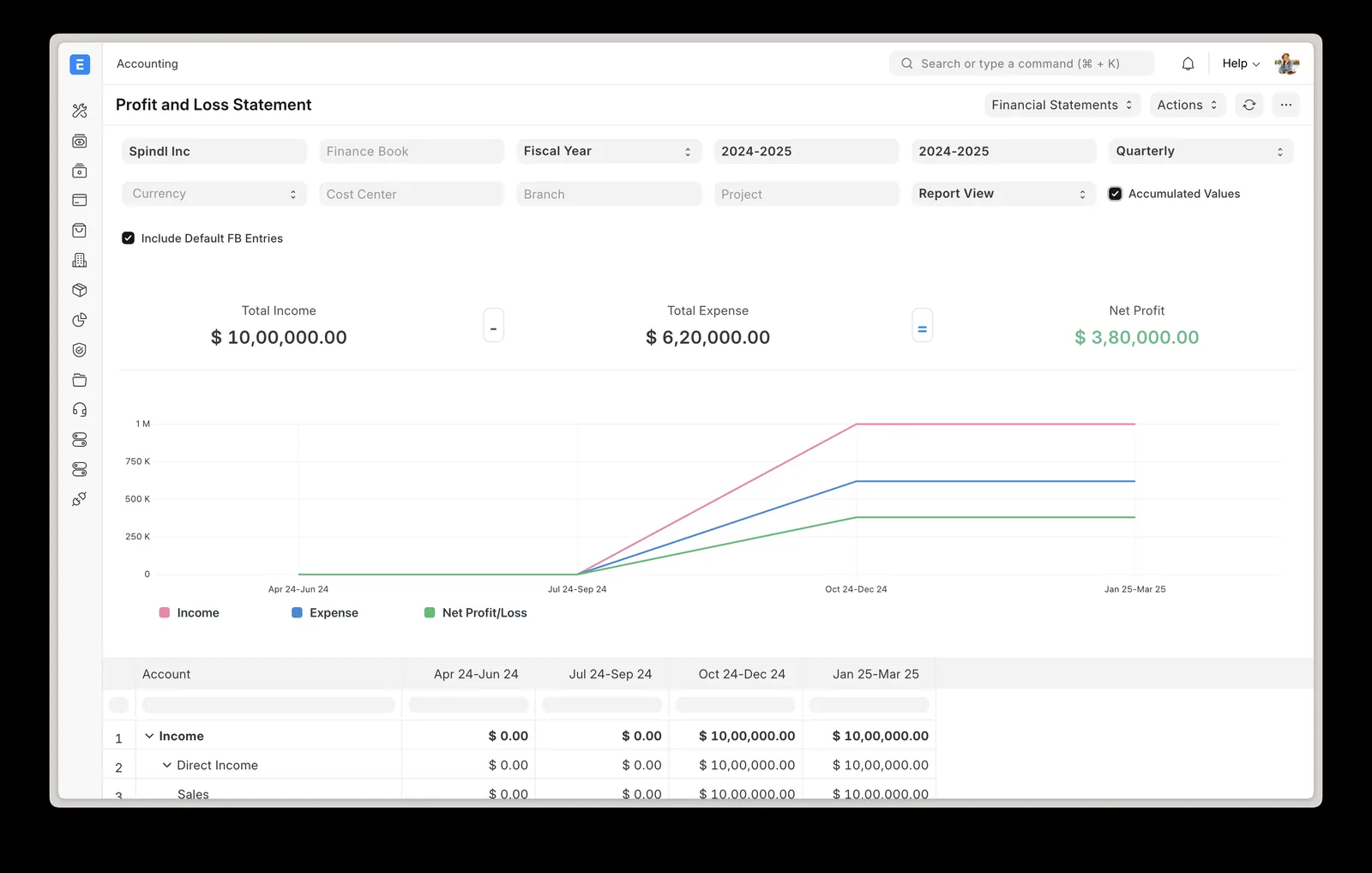
During consulting we often mock up the finance view management will get after go-live, so the expected outcome is concrete before anyone signs off.
The value is in decisions made early and written down.
Implementers quote against a fit-gap register, so fewer surprises surface during the build.
Requirements are matched to standard features first, which keeps future upgrades simpler.
Agreed process maps settle disputes before configuration starts.
VAT, corporate tax and e-invoicing data needs shape masters and accounts from day one.
Continue your planning with these pages.
We configure the system for the rules UAE businesses report against, and test it before go-live.
General information, not tax or legal advice. Confirm current requirements with the FTA, MOHRE or your advisor. See all UAE compliance guides.
On-site workshops in Dubai, Abu Dhabi and Sharjah, and remote or on-site delivery across the Northern Emirates and free zones.
Official sources and references
Facts on this page were checked against these sources in October 2026. Rules change, so confirm current requirements before acting.
Still have a question? Our consultants are happy to help.
Ask an ExpertNo. The blueprint and roadmap are yours. Many clients continue with us, but the documents are written so another partner or your in-house team can use them.
Yes. If the fit-gap shows heavy gaps, we say so and explain which platform would fit better, whether Zoho, Odoo, Dynamics 365 or a custom build.
Yes. A post-implementation review follows the same method, comparing how ERPNext is used today with how it should be used, and produces a remediation roadmap.
We design how ERPNext captures data for VAT, corporate tax and e-invoicing. The tax treatment itself should be confirmed with your tax advisor, and we include space in the blueprint for their sign-off.
We need a sponsor who can make decisions, plus one process owner from each department in scope, usually finance, sales, purchasing and the warehouse. Each workshop takes a few hours, and we share notes afterwards so people who could not attend can comment before anything is fixed in the blueprint.
We quote a fixed fee after a short scoping call, based on the number of entities, departments and integrations in scope.
Related Solutions
Related Industries
Related ERP Platforms
Book a scoping call and we will outline the consulting engagement, deliverables and timeline for your business.
Dubai, United Arab Emirates