L
O
A
D
I
N
G


Zoho, Odoo, ERPNext, Dynamics 365 and custom ERP, delivered by one accountable team.

A general trading license lets you sell almost anything. Your ERP should keep up when the product mix, supplier list and customer base change every quarter.
A general trading company in the UAE needs an ERP that handles unrelated product categories, each with its own units, margins, tax codes and reorder rules, while tracking deal-by-deal profit after freight, duty and clearing. Zoho, Odoo, ERPNext and Dynamics 365 Business Central can all do this when the category structure is designed before items are imported, alongside credit control and VAT invoicing.
An ERP for general trading companies in the UAE has a harder job than one built for a single-category distributor. A general trading license in Dubai or Sharjah lets a company deal in a wide range of unrelated goods, and many owners use that freedom: tyres one month, kitchen equipment the next, a container of garments when a buyer in Africa asks for it. The software has to absorb that variety without a consultant rebuilding it every time.
Most general traders we meet started on Tally, QuickBooks or Excel with one person who knows where everything is. That works until the business runs five product families with different units, margins and suppliers. Then nobody can answer simple questions quickly: which line actually makes money after freight and duty, which customers are past their credit terms, and what stock is sitting unsold in the Al Quoz warehouse.
We implement Zoho, Odoo, ERPNext and Microsoft Dynamics 365 Business Central for trading businesses, and we also build custom extensions where a standard app falls short. If you deal in one focused category, our broader ERP for trading companies page or a sector page such as building materials trading may fit better. This page is for the multi-line generalist.

These issues come up again and again when we map processes for multi-line traders across the emirates.
New items get created by whoever raises the purchase order, so the same product exists three times under different names. Reports by category become meaningless and stock counts never reconcile.
Freight, customs duty, clearing agent fees and port charges arrive as separate bills weeks after the goods. Without landed cost allocation, sales staff price from the supplier invoice and some lines quietly lose money.
The same company may sell cash-and-carry to walk-in buyers, on 60-day terms to contractors and on advance payment to export customers. Each needs different pricing, documents and credit rules.
Back-to-back deals, where goods are bought for a specific buyer, often sit outside the system in email and spreadsheets. Advances, supplier payments and the final margin are hard to tie together.
Pricing logic, supplier contacts and customer history live in the owner's head or the senior accountant's files. When either is away, quotations slow down and mistakes rise.
Whether the deal is a stocked item or a back-to-back order, the same documents link from enquiry to cash so profit is visible per transaction.
One shared database: every step updates stock, finance and reports in real time.
A general trading rollout usually starts with these modules. Names differ by platform but the scope is similar.
A controlled item master with category-level defaults for units, tax codes, income accounts and reorder points.
Quotation templates per customer type, price lists in AED and foreign currency, and conversion to orders in one click.
Request for quotation to several suppliers, comparison, and purchase orders linked back to the sales order that triggered them.
Stock by location, bin and lot where needed, with transfers between a showroom, main warehouse and any third-party store.
Allocate freight, duty and clearing to receipts by value, weight or quantity so item cost reflects reality.
Receivables, payables, bank reconciliation and VAT reporting that draw directly from trading documents.
Credit limits and overdue blocks per customer, with approval routes when sales staff need an exception.
Track enquiries and follow-ups across product lines so leads from a trade fair or WhatsApp do not get lost.
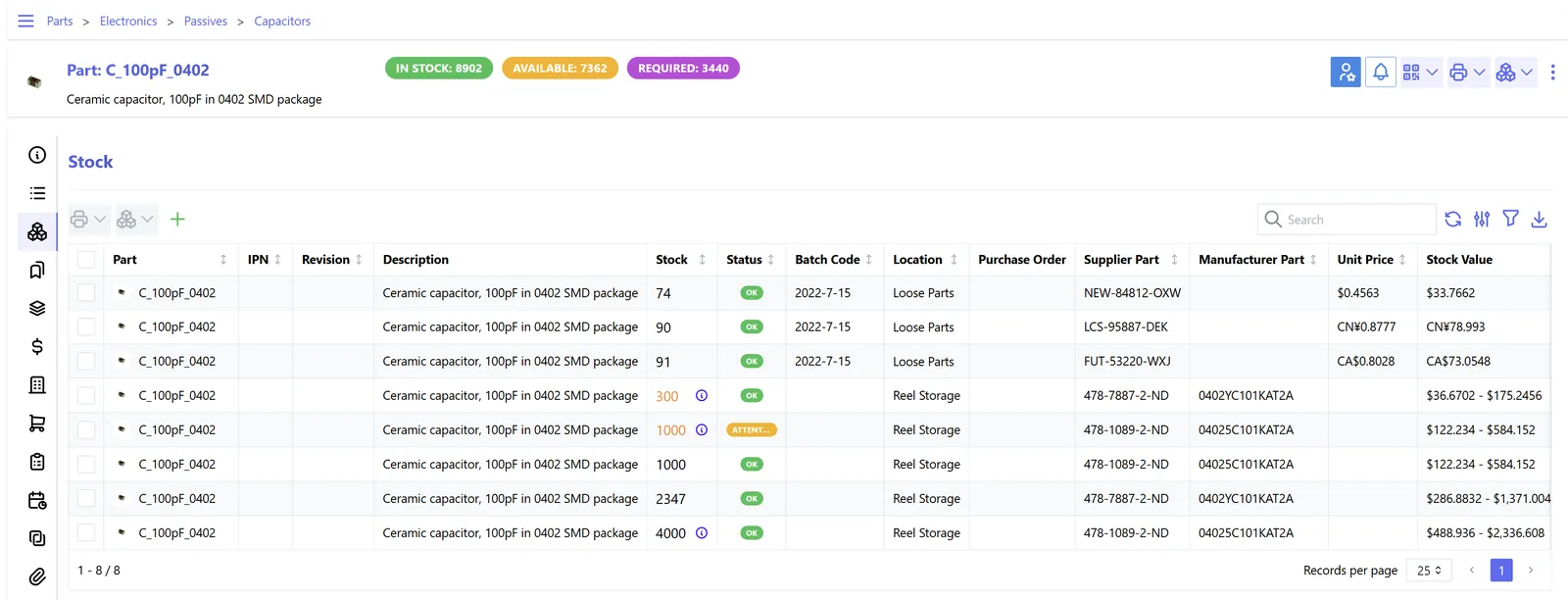
General trading owners usually want one screen that compares product families side by side rather than one total revenue figure.
There is no single right answer. This is how we usually match platforms to general traders after a discovery workshop.
| Company profile | Often a good fit | Why |
|---|---|---|
| Owner-led trader, under 10 users, mostly local sales | Zoho Books with Zoho Inventory | Quick setup, low running effort, UAE VAT features and good mobile apps for the owner. |
| Growing trader with several warehouses and many SKUs | Odoo | Strong inventory, purchase and landed cost apps in one database, with room to add CRM and ecommerce. |
| Cost-conscious trader with in-house IT interest | ERPNext | Open source with no per-user license fee, flexible item and pricing rules; hosting and support still cost money. |
| Larger group with several legal entities and audit pressure | Dynamics 365 Business Central | Mature finance, multi-company consolidation and the Microsoft 365 ecosystem many groups already use. |
| Trader with unusual deal structures or brokerage models | Custom ERP or a platform plus custom modules | When back-to-back or commission deals do not fit standard flows, we extend rather than force a workaround. |
Final choice depends on users, process complexity and budget. See our four-platform comparison for detail.
The ERP is configured to support these rules; your tax advisor confirms how they apply to your specific trades.
Standard 5% supplies, zero-rated exports and imports under reverse charge all need separate tax codes. The system maps each to the correct box of the VAT return filed on EmaraTax.
Invoices carry your TRN, the customer's TRN where applicable, and the prescribed fields. Templates can be set per customer type so cash sales and B2B invoices both comply.
With corporate tax at 9% above AED 375,000 of taxable income, clean revenue and expense coding by product line makes return preparation and any adjustments easier. Confirm treatment with your tax advisor.
Under Ministerial Decisions 243 and 244 of 2025, B2B invoices move to the PINT AE format through Accredited Service Providers, with mandatory phases starting from 2027 depending on revenue. Check the latest Ministry of Finance and FTA guidance for your dates.
General information, not tax or legal advice. Rules change; confirm current FTA, MOHRE and Ministry of Finance guidance with your advisor.
Benefits our trading clients typically describe after go-live. Results depend on data quality and adoption.
Landed cost and category reporting show which lines carry the business and which ones only add work.
Sales staff quote from current costs and price lists instead of calling the accountant for each item.
Automatic credit holds stop new deliveries to customers who are already overdue.
Supplier history, pricing logic and customer terms live in the system, not in one person's memory.
A focused general trading rollout often takes 8-14 weeks. Larger catalogs or several entities take longer.
Durations are typical ranges; your plan is agreed after discovery.
Map how each product line is bought, stocked, priced and sold, and agree the category structure.
Merge duplicates, set units of measure and assign categories before anything is imported.
Set up price lists, landed cost rules, credit limits, VAT codes and document templates.
Load opening stock, open orders and balances, then run real deals through the test system.
Train users by role, go live at a period start and support the first month-end close.
Explore platform options and neighbouring trading sectors.
We configure the system for the rules UAE businesses report against, and test it before go-live.
General information, not tax or legal advice. Confirm current requirements with the FTA, MOHRE or your advisor. See all UAE compliance guides.
On-site workshops in Dubai, Abu Dhabi and Sharjah, and remote or on-site delivery across the Northern Emirates and free zones.
Official sources and references
Facts on this page were checked against these sources in October 2026. Rules change, so confirm current requirements before acting.
Still have a question? Our consultants are happy to help.
Ask an ExpertYes. Each category can carry its own units, tax codes, accounts and reorder rules, while sharing one customer and supplier database. The key is designing the category structure before importing items.
The sales order can trigger a linked purchase order, and goods can be marked as drop-shipped or received and delivered the same day. Customer advances, supplier payments and the final margin all link to the same deal.
Opening balances, open invoices, customers, suppliers and items can be migrated. Full transaction history is usually kept in an archive rather than imported line by line. See our Tally migration page.
The FTA keeps a Tax Accounting Software Register, and you should check its current version for any specific product. Separately, we configure the system to produce compliant tax invoices, VAT return figures and audit files.
Our office is in Dubai. We serve general traders in Sharjah, Ajman, Abu Dhabi and the other emirates on-site and remotely.
Related Solutions
Related Industries
Related ERP Platforms
Book a discovery call and we will show how your categories, deals and margins would look in a single ERP.
Dubai, United Arab Emirates