L
O
A
D
I
N
G


Zoho, Odoo, ERPNext, Dynamics 365 and custom ERP, delivered by one accountable team.

Perfumes, creams and personal care products depend on exact formulas and traceable batches. We set up ERP so every bottle on a shelf can be traced back to its ingredients.
ERP for cosmetics manufacturing in the UAE should control versioned formulas, batch and expiry tracking from raw material to finished bottle, bulk compounding separate from filling, and private-label SKUs sharing one base formula. Perfume and oud houses, skincare labs and contract fillers commonly use Odoo, ERPNext, Dynamics 365 Business Central or Zoho, depending on how much they manufacture versus trade.
ERP for cosmetics manufacturing in the UAE covers a wide range of businesses: perfume and oud houses compounding fragrances in Ajman or Sharjah, skincare and haircare labs in Dubai's industrial zones, and contract manufacturers filling private-label products for regional brands. What they share is a dependence on formulas, batches and shelf life, and a constant stream of new SKUs as packaging, sizes and gift sets change.
Fragrance work has its own rhythm. Concentrates are blended, then left to mature before filtering and filling, so stock sits in tanks for weeks with value attached to it. Skincare lines deal with emulsions, preservatives and stability testing. Private-label work means the same base formula may be filled into a dozen different bottles under different brand names, each with its own artwork and labelling. Ramadan, Eid and national holidays bring gift-set peaks that tie up components months ahead.
We implement Odoo, ERPNext, Dynamics 365 Business Central and Zoho for these businesses. This page focuses on formula and batch control; for broader process manufacturing see ERP for chemical manufacturing, and for production planning in general see ERP for manufacturing companies.

These issues usually push a cosmetics business toward a proper ERP.
When a formula lives in one person's file, changes are not recorded and production may use an outdated version. A complaint or audit then becomes very hard to answer.
Raw materials arrive with supplier lot numbers that are not carried into production records. If an ingredient batch is found faulty, nobody can quickly list which finished products used it.
Fragrance blends and creams sitting in tanks or drums before filling are often not recorded as stock. Month-end inventory and cost of goods are then understated or guessed.
Bottles, caps, pumps, boxes and labels come in many variants per brand. Shortages of a single cap colour can stop a whole order, while obsolete artwork accumulates in the store.
Retailers and distributors return near-expiry or damaged stock. Without expiry tracking by batch, the business cannot rotate stock properly or measure write-offs.
We separate bulk production from filling so stock and cost are visible at each stage.
One shared database: every step updates stock, finance and reports in real time.
These modules cover the core of most cosmetics operations; regulatory documentation is usually handled alongside them.
Formulas stored as bills of materials with percentages, scalable batch sizes and version control with approval by the R&D or QA lead.
Lot numbers captured at receipt and assigned at production, with manufacturing and expiry dates printed on labels and carried to invoices.
Bulk production orders create tank or drum stock; filling orders consume bulk and packaging components to make finished SKUs.
Incoming ingredient checks, in-process tests and finished product release, with stock held in quarantine until QC approves it.
Bottles, closures, cartons and labels managed by brand and artwork version, with reorder levels and obsolete stock reports.
Seasonal gift boxes defined as kits that combine several finished products and packaging, with assembly orders and component reservation.
Customer-specific SKUs, artwork approvals and pricing linked to a shared base formula, so contract manufacturing stays profitable.
Orders from retailers, distributors and online channels, with batch-level picking so first-expiry stock ships first.
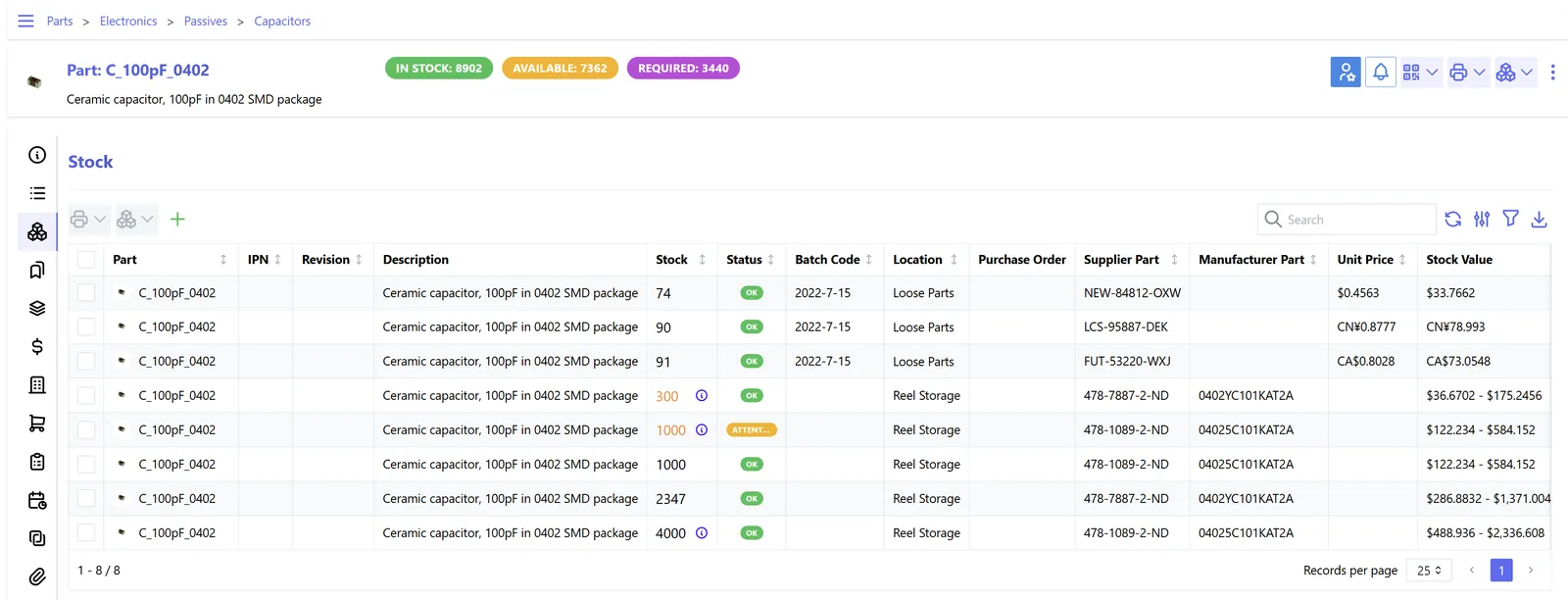
For cosmetics, the critical view is stock by batch and expiry, not just quantity on hand.
The right ERP depends on how much you manufacture versus fill and trade.
| Company profile | Often a good fit | Why | Watch out for |
|---|---|---|---|
| Perfume brand that outsources compounding and sells through its own shops | Zoho (Books, Inventory, Commerce) or Odoo with POS | Batch tracking, kits and retail sales without heavy production setup | Zoho lacks native multi-stage manufacturing if you later bring compounding in-house |
| Fragrance or oud house with in-house blending, maceration and filling | Odoo (Manufacturing, Quality, Inventory) | Multi-level BOMs, lots with expiry, quality checks and kits in one system | Maceration time and tank tracking usually need configuration |
| Contract manufacturer serving many private-label brands | ERPNext or Odoo | Batch, QC and customer-specific items with flexible pricing; ERPNext is open source and extendable | Artwork approval workflows often need customization |
| Larger group with regional distribution companies | Dynamics 365 Business Central | Strong multi-company finance, item tracking and reporting | Production depth depends on edition; confirm current Microsoft licensing |
We implement Zoho, Odoo, ERPNext, Dynamics 365 and custom ERP, and recommend based on your production model.
ERP supports compliance by keeping records complete and retrievable. It does not replace product registration or regulatory advice; confirm requirements with the relevant authority and your tax advisor.
Cosmetics sold in the UAE generally need registration with the relevant authority, for example through Dubai Municipality's product registration system for the Dubai market. The ERP can store registration numbers, validity dates and approved labels against each SKU so expired registrations are flagged.
Cosmetics and perfumes are generally standard-rated at 5% for local sales, with possible zero-rating for qualifying exports. Tax invoices need your TRN and prescribed fields, which the ERP prints automatically.
Many fragrance producers operate from free zones such as Ajman Free Zone, SAIF Zone or Hamriyah. Qualifying Free Zone Person status has conditions, so keep qualifying and other income separable and confirm your position with an advisor.
UAE e-invoicing via Accredited Service Providers and the PINT AE format becomes mandatory in phases from 2027. Retailers and distributors will expect structured invoices. Check the latest Ministry of Finance and FTA guidance for your date.
General information, not tax or legal advice. Rules change; confirm current FTA, MOHRE and Ministry of Finance guidance with your advisor.
Benefits depend on data discipline as much as on the system.
A faulty ingredient lot can be traced forward to every finished batch and customer in minutes rather than days.
Production always uses the approved formula version, and every change has an owner and date.
Blends in maturation and bulk awaiting filling appear in inventory value and planning.
Component needs for seasonal kits are known early enough to order bottles and boxes in time.
Typical ranges for a single production site; regulatory data collection can extend the setup phase.
Durations are typical ranges; your plan is agreed after discovery.
We map formulas, production stages, QC points, packaging and sales channels.
Ingredients, formulas, packaging components, finished SKUs and kits are structured and loaded.
Production routes, quality checks, batch rules and label formats are configured.
Several batches run end to end, including a mock recall trace.
Go-live with on-site or remote hypercare, then ongoing support.
Platforms, modules and adjacent industries worth reading next.
We configure the system for the rules UAE businesses report against, and test it before go-live.
General information, not tax or legal advice. Confirm current requirements with the FTA, MOHRE or your advisor. See all UAE compliance guides.
On-site workshops in Dubai, Abu Dhabi and Sharjah, and remote or on-site delivery across the Northern Emirates and free zones.
Official sources and references
Facts on this page were checked against these sources in October 2026. Rules change, so confirm current requirements before acting.
Still have a question? Our consultants are happy to help.
Ask an ExpertYes. Formula records can be restricted by role so only R&D and production leads see full ingredient percentages, while store staff see only the quantities they need to issue.
We usually record compounding as a bulk production order and place the blend in a tank location with a hold or quarantine status. After the maturation period and QC approval, the bulk becomes available for filling orders.
Yes. With lot tracking enabled from raw material receipt, you can trace an ingredient lot forward to finished batches and customer deliveries, or trace a finished batch back to its ingredients.
No. Registration is done through the authority's own portal. The ERP can store registration numbers, expiry dates and approved documents against each product and alert you before renewals are due.
The base fragrance is one bulk item with one formula. Each brand's SKU has its own BOM that consumes the shared bulk plus brand-specific bottles, caps and labels, so costs and stock stay correct.
Related Solutions
Related Industries
Related ERP Platforms
Book a session and we will map one product from raw material to retail shelf in the ERP you are considering.
Dubai, United Arab Emirates