L
O
A
D
I
N
G


Zoho, Odoo, ERPNext, Dynamics 365 and custom ERP, delivered by one accountable team.

UAE manufacturers need to know what a product really costs and where materials went. We configure ERPNext manufacturing around your routings, work centers and batches.
ERPNext is a practical manufacturing ERP for small and mid-sized UAE factories in places such as Dubai Industrial City, KEZAD and Sharjah's industrial areas. Its Manufacturing module covers multi-level bills of materials, routings, workstations, work orders, job cards and production planning, and because it shares a database with Stock and Accounts, consumption and output post straight to inventory valuation.
ERPNext for manufacturing in the UAE is a practical choice for small and mid-sized factories in Dubai Industrial City, Dubai Investment Park, KEZAD, Sharjah's industrial areas and the Ras Al Khaimah free zones. These plants make things like packaging, building products, food items, chemicals, furniture and fabricated metal. They need production control that the shop floor will actually use, linked to stock and accounts.
The ERPNext Manufacturing module covers bills of materials, routings, workstations, work orders, job cards and production planning. Because it shares the same database as Stock and Accounts, consumption and output post straight to inventory valuation and the general ledger. There is no nightly sync between a production tool and an accounting tool to break.
We do not pretend ERPNext fits every factory. Process plants with complex recipes and heavy regulatory batch records may need more customization, and we will say so in discovery. For a side-by-side view, see ERPNext vs Odoo for manufacturing.
The products we configure, integrate and support on projects like this one.
 ERPNext
 Frappe HR
 Frappe Framework
 Frappe CRM
Product names and logos are trademarks of their respective owners and are shown only to identify the software we implement.
These are the issues UAE factory owners and plant managers raise most often in our first meetings.
Costing is done once a year in a spreadsheet using old material prices. When aluminium, resin or steel prices move, nobody knows which products have become unprofitable.
Purchasing finds out about shortages when the line is already waiting. There is no link between confirmed sales orders, the production plan and what needs to be bought.
Once materials leave the store, there is no record of where they are until finished goods appear. Wastage and rework are absorbed without being measured.
When a customer complains about a product, the factory cannot trace which raw material batches went into that lot. This is a serious problem for food, cosmetics and chemical makers.
Painting, galvanizing or printing is often sent to outside vendors. Material sent out and returned is tracked on paper, so stock counts rarely match.
Incoming and final inspections are recorded on forms that are filed and forgotten. There is no link between a failed check and the supplier or batch.
A common pattern for UAE manufacturers that produce against customer orders.
One shared database: every step updates stock, finance and reports in real time.
Most of these are standard ERPNext. Custom work is usually limited to print formats, shop-floor screens and reports.
Multi-level BOMs with raw materials, operations, scrap items and process loss, costed from valuation rate, last purchase rate or price list.
Operations with time per unit and workstation hour rates, so labor and overhead are part of the product cost.
Pulls demand from sales orders or material requests, explodes BOMs and proposes work orders and purchase requests for shortfalls.
Material transfer to work in progress, then job cards to record time, operator and completed quantity at each step.
Send raw materials to a vendor, receive the processed item and keep supplied stock on record against the subcontracting order.
Batch numbers with manufacturing and expiry dates on both inputs and outputs, giving traceability in both directions.
Inspection templates with parameters and acceptance ranges, triggered on purchase receipt, delivery or manufacture.
Machine records with preventive maintenance schedules and logs, so downtime can be planned rather than suffered.
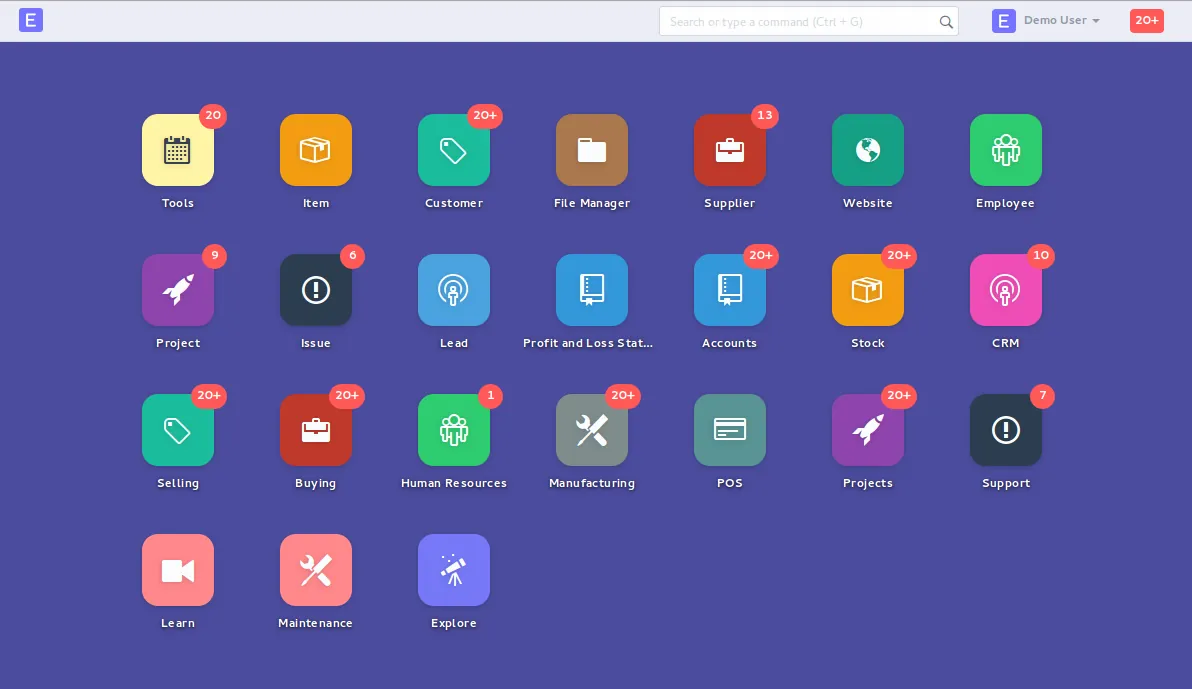
We set up an ERPNext workspace that shows the plant's position without opening a dozen reports.
ERPNext is configured to support these points. Confirm tax treatment with your tax advisor and certification rules with the issuing body.
Input VAT on imported raw materials and machinery is generally accounted through the reverse charge for registered businesses. Exports of finished goods may be zero-rated with proper evidence. We map ERPNext tax templates to the EmaraTax return boxes.
Many factories sit in a free zone with a separate mainland trading arm. ERPNext's multi-company setup and inter-company invoices keep both sets of books clean and help separate qualifying income for corporate tax review.
Manufacturers bidding for government and semi-government work often need an ICV certificate. ERPNext cannot issue one, but clean data on local purchases, payroll and production costs makes the certification work easier.
Food, cosmetics and chemical producers face authority checks on labelling and recall readiness. Batch tracking from raw material to dispatch lets you answer a traceability query from the system rather than from paper files.
General information, not tax or legal advice. Rules change; confirm current FTA, MOHRE and Ministry of Finance guidance with your advisor.
Manufacturing projects take longer than trading ones because BOMs and routings must be verified. A focused rollout often runs 10 to 16 weeks.
Durations are typical ranges; your plan is agreed after discovery.
We walk the floor, list products, operations and workstations, and agree how detailed shop-floor recording should be.
Your engineers verify BOMs and times for the main product families. We load them and run cost rollups for review.
Production planning settings, quality templates, subcontracting, batch rules and job card screens for supervisors.
One line or product family runs in ERPNext in parallel with the old method to prove quantities and costs.
Remaining lines move over, opening WIP is settled and we support the first month-end close.
Read more about ERPNext and manufacturing ERP in the UAE.
We configure the system for the rules UAE businesses report against, and test it before go-live.
General information, not tax or legal advice. Confirm current requirements with the FTA, MOHRE or your advisor. See all UAE compliance guides.
On-site workshops in Dubai, Abu Dhabi and Sharjah, and remote or on-site delivery across the Northern Emirates and free zones.
Official sources and references
Facts on this page were checked against these sources in October 2026. Rules change, so confirm current requirements before acting.
Still have a question? Our consultants are happy to help.
Ask an ExpertYes. A BOM can contain sub-assemblies that have their own BOMs, and the production plan can explode all levels to calculate material needs. Costs roll up from the lowest level to the finished product.
Job cards can be opened in a browser on a tablet or shop-floor PC. We usually simplify the screen so an operator only starts, pauses and completes a job and enters quantities. Barcode scanning of work orders can be added where it helps.
ERPNext values finished goods from the materials actually consumed plus operating cost from job card time and workstation rates. You can compare this with the BOM standard cost to see variances by work order.
It handles batches, expiry dates and quality inspection well, which covers much of what food producers need. Recipe scaling and some regulatory reports may need customization; we assess that during discovery. See our food manufacturing ERP page for more.
ERPNext has a REST API, so machine counters or an MES can post production quantities into work orders. The scope depends on what your equipment can export, and we assess it case by case.
Related Solutions
Related Industries
Related ERP Platforms
Share one BOM and routing with us and we will model it in ERPNext so you can see the cost rollup before committing.
Dubai, United Arab Emirates