L
O
A
D
I
N
G


Zoho, Odoo, ERPNext, Dynamics 365 and custom ERP, delivered by one accountable team.

For bakeries, central kitchens, snack, dairy, spice, frozen and ready-meal producers who need costed recipes and one-step recall.
A UAE food manufacturer needs an ERP that treats recipes as versioned bills of materials with yield and wastage, records lots at receipt and consumption for forward and backward traceability, enforces expiry dates with FEFO picking, and prints labels with batch and expiry. Bakeries, dairies, central kitchens and ready-meal producers can then answer recall questions on screen within hours.
An ERP for food manufacturing in the UAE has to answer a question regulators and retail buyers will eventually ask: if this raw material batch was contaminated, which finished products contain it and where did they go? A producer that cannot answer within hours is exposed, whatever the quality of its food.
Food factories in Dubai Industrial City, Dubai Investment Park, Al Quoz, Sharjah, Umm Al Quwain and KEZAD work with imported ingredients, short shelf lives and tight supermarket delivery windows, a pressure shared with food distributors. Recipes change with ingredient availability, yields vary by batch, and wastage from trimming, rejects and expiry eats margin when nobody measures it.
A food-focused ERP manages recipes as bills of materials, records which ingredient lots went into each production batch, assigns expiry dates to finished goods and enforces first-expiry-first-out picking. It keeps quality checks, halal documentation and supplier certificates against the right lots, and shows actual recipe cost against standard. For the wider production picture, see ERP for manufacturing companies.
These problems are typical in food plants that grew on spreadsheets and paper production logs.
Paper batch sheets make it hard to trace which finished batches used a given flour or dairy lot. A recall that should take an hour can take days.
Ingredient prices move with imports and currency, but recipe costs are updated once a year. Products that look profitable may be losing money.
Actual yields differ from standard because of trimming, moisture loss or rejects. Without recording them per batch, losses stay invisible.
Short-life products and ingredients expire in the store because pickers take the nearest stock rather than the oldest.
Food safety audits and retailer audits require temperature logs, cleaning records and supplier certificates. Collecting them from files takes days each time.
Supermarkets order daily, apply listing and promotion terms, and return near-expiry goods. Reconciling these deductions manually delays collections.
Each step records lots and quality results so traceability is built in, not reconstructed later.
One shared database: every step updates stock, finance and reports in real time.
The modules below cover production control, traceability and the commercial side of selling to retail and foodservice.
Versioned recipes with ingredient quantities, expected yield and by-products or waste.
Plan batches from customer orders and forecasts, considering ingredient availability and line capacity.
Lots on every ingredient and finished batch, expiry dates calculated from production date and shelf life.
Incoming, in-process and final checks with pass or fail rules that block release of failed lots.
Standard versus actual cost per batch, including ingredients, packaging, labor and overhead.
Chilled, frozen and dry locations with first-expiry-first-out picking rules.
Customer-specific price lists, promotions, rebates and near-expiry returns for supermarkets and foodservice.
Halal, food safety and analysis certificates stored per supplier and lot with expiry reminders.
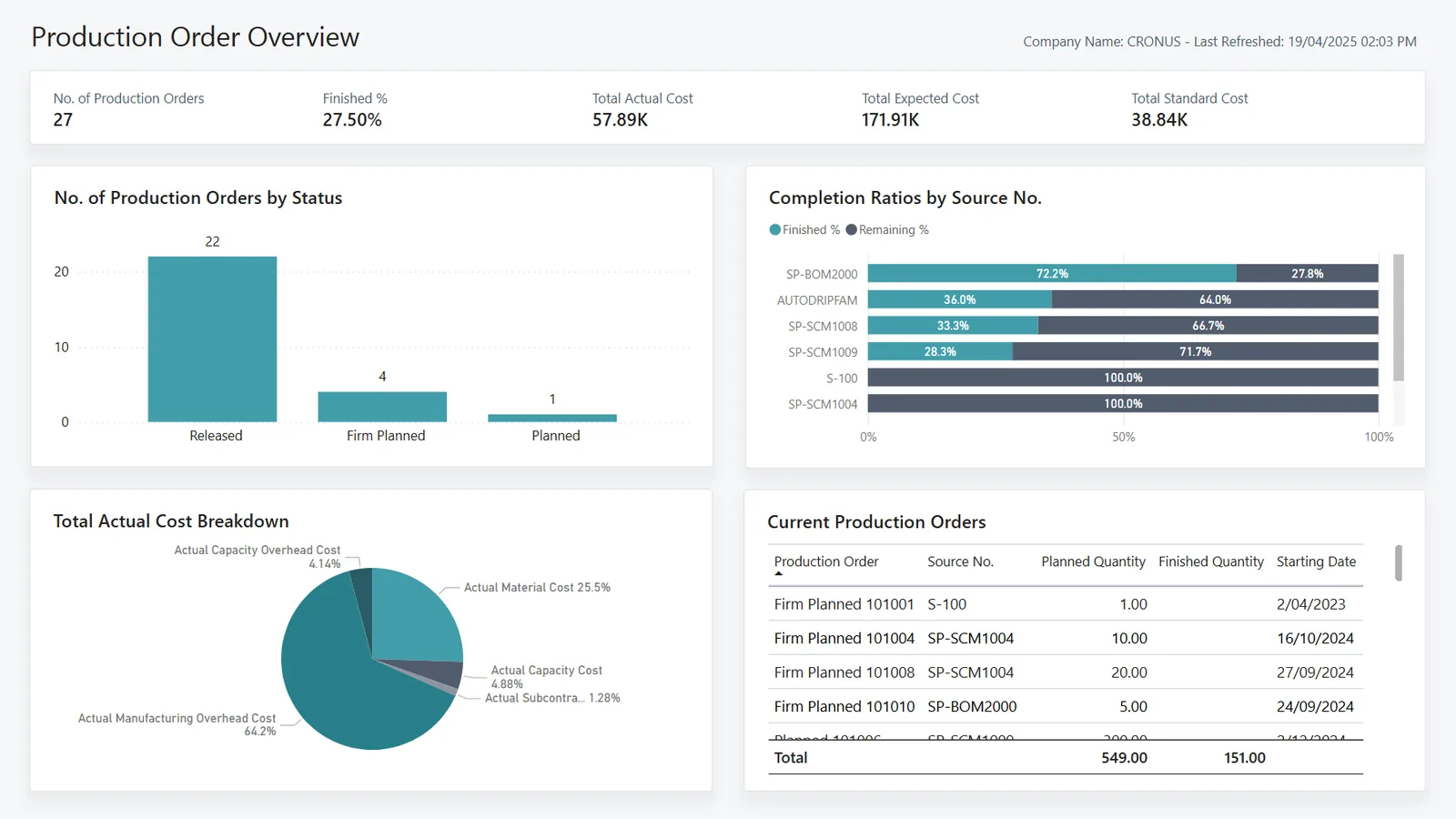
Production, quality and stock expiry on one screen for the morning meeting.
We implement Zoho, Odoo, ERPNext, Dynamics 365 and custom ERP. For food production, manufacturing depth matters more than anything else.
| Company profile | Usually fits | Why |
|---|---|---|
| Small bakery or central kitchen with simple recipes | Zoho Inventory with Zoho Books, or ERPNext | Batch tracking with simple assembly; ERPNext adds fuller BOMs at low license cost. |
| Mid-size producer selling to supermarkets | Odoo | Manufacturing, quality, lots and expiry, FEFO removal and sales in one database. |
| Producer with strong in-house IT and budget focus | ERPNext | Open-source manufacturing with batches, quality inspection and BOMs. |
| Multi-plant or multi-entity food group | Microsoft Dynamics 365 Business Central or Supply Chain | Multi-company finance, item tracking and deeper planning for larger operations. |
| Producer with unusual process or regulator reporting | Custom ERP or platform extension | When process steps or reports do not fit standard manufacturing flows. |
Beverage, FMCG and food distribution have their own pages; this page covers producers that transform ingredients.
The ERP keeps the records that support these requirements. Confirm regulatory requirements with your authority and tax treatments with your advisor.
Food producers are regulated by local authorities such as Dubai Municipality and the Abu Dhabi Agriculture and Food Safety Authority (ADAFSA). Batch, QC and temperature records in the ERP support inspections and HACCP-based food safety plans.
Halal certification in the UAE follows national standards and schemes overseen by the Ministry of Industry and Advanced Technology. The ERP stores certificates per ingredient and supplier and flags expiry.
Production and expiry dates are calculated per batch and printed on labels, supporting UAE labeling standards for prepackaged food.
Most food sales are standard-rated at 5%. B2B invoices to retailers will move to PINT AE e-invoicing through an Accredited Service Provider from 2027 depending on revenue; check the latest Ministry of Finance and FTA guidance.
General information, not tax or legal advice. Rules change; confirm current FTA, MOHRE and Ministry of Finance guidance with your advisor.
We do not quote invented figures. These are the improvements that matter on a food plant.
Forward and backward lot reports replace manual searches through batch sheets.
Actual batch cost shows which products and customers really make money.
FEFO picking and expiry alerts reduce write-offs on short-life items.
QC results and certificates are already filed against lots and suppliers.
Ranges for a single plant. Recipe data quality and label integration affect timing most.
Durations are typical ranges; your plan is agreed after discovery.
Walk the line from receiving to dispatch and document recipes, QC points and storage zones.
Build recipes, units, packaging BOMs, shelf-life rules and lot numbering.
Configure work orders, quality checks, FEFO rules, label printing and scanners.
Run real batches end to end and test a mock recall from one ingredient lot.
Go live line by line with on-site support and review yields after the first weeks.
Related manufacturing, distribution and platform pages.
We configure the system for the rules UAE businesses report against, and test it before go-live.
General information, not tax or legal advice. Confirm current requirements with the FTA, MOHRE or your advisor. See all UAE compliance guides.
On-site workshops in Dubai, Abu Dhabi and Sharjah, and remote or on-site delivery across the Northern Emirates and free zones.
Official sources and references
Facts on this page were checked against these sources in October 2026. Rules change, so confirm current requirements before acting.
Still have a question? Our consultants are happy to help.
Ask an ExpertWith lots recorded at receipt and consumption, a backward or forward trace is a report you run on screen. It shows every finished batch that used an ingredient lot and every customer who received it.
Yes. Recipes are versioned BOMs, so you can change an ingredient or quantity and keep the history of which version was used for each batch.
Yes. Labels can be printed from the production order with product name, batch number, production and expiry dates and barcodes. Arabic text on labels is possible and is tested during setup.
It stores halal and other certificates against suppliers and ingredient lots, with expiry reminders. It does not certify products; certification comes from the approved bodies.
Each production order records actual output and any scrap or by-products. The difference against the recipe standard appears in yield and cost reports per batch.
It depends on size and complexity. Odoo is a common fit for mid-size producers, ERPNext for budget-conscious plants, and Dynamics 365 for larger groups. We recommend after reviewing your recipes and process.
Related Solutions
Related Industries
Related ERP Platforms
Book a demo where we trace an ingredient lot through production to customers, using a sample of your own recipes.
Dubai, United Arab Emirates