L
O
A
D
I
N
G


Zoho, Odoo, ERPNext, Dynamics 365 and custom ERP, delivered by one accountable team.

Every style multiplies into dozens of size and colour combinations. We set up ERP so your cutting room, stitching lines, CMT partners and finance all count the same pieces.
Garment manufacturers in the UAE can use Odoo, ERPNext or Business Central, which all support a parent style with size and colour variants carrying their own stock, cost and barcode. A good setup tracks cut, stitch, finish and pack stages by bundle or lot, reconciles CMT subcontractor issues and returns piece by piece, and manages uniform contracts with per-branch size lists.
ERP for garment manufacturing in the UAE has to handle something most generic systems treat as an afterthought: one style turns into a grid of sizes and colours, and each cell of that grid has its own fabric consumption, its own cut quantity and its own shortfall. A uniform maker in Sharjah's industrial areas, an abaya atelier in Ajman or a private-label workshop in Dubai Investment Park all feel this the moment orders grow beyond what a production manager can track on a whiteboard.
Much of the local trade is contract work. School uniforms land in a tight window before the academic year starts, hotel and hospital groups reorder staff wear on annual tenders, and corporate clients want logo garments in exact quantities per branch. Each of those orders needs a size breakdown, a fabric plan, a production schedule and, very often, staggered deliveries against one contract. When that lives in email threads and Excel, cutting errors and missed delivery dates follow.
We implement Odoo, ERPNext, Microsoft Dynamics 365 Business Central and Zoho for apparel producers, and we build custom extensions where the standard product stops. This page explains how a garment ERP should be structured; for the broader sector view see our ERP for manufacturing companies page, and for fabric production rather than sewing, see ERP for textile manufacturing.

These are the problems we hear most often from apparel and uniform manufacturers before an ERP project starts.
Costing sheets assume a marker efficiency that the cutting table rarely achieves. Without recording actual metres issued against each cut, the true cost per piece stays unknown until stock runs out.
A customer orders 40 of each size, the cutting room cuts to fabric width and the packing list shows something else. Reconciling ordered, cut, stitched and packed quantities by size takes days at the end of every order.
Cut panels go to outside stitching units with a delivery note and come back weeks later in partial lots. Shortages, rejects and leftover trims are rarely matched against what was sent out.
Buttons, zips, labels, embroidery thread and polybags are cheap individually but stop a line when missing. They are often bought ad hoc because nobody exploded the trim list from the style.
Uniform season compresses months of work into a few weeks. Without a view of line capacity against confirmed orders, sales keep accepting work the floor cannot finish on time.
Each step creates a record that the next step consumes, so quantities by size carry through from order to invoice.
One shared database: every step updates stock, finance and reports in real time.
Not every module is needed on day one. These are the ones that carry the most weight in apparel production.
A single style record generates every size and colour combination, with shared attributes such as fabric, season and customer, and separate barcodes per variant.
Fabric per piece, interlining, trims and packing material defined once, with size-specific consumption where larger sizes use more fabric.
Cutting, stitching, embroidery or printing, washing, finishing and packing defined as operations, with output recorded at each stage.
Issue cut panels and trims to CMT units, receive finished goods back and pay the job-work charge, with balance-at-subcontractor reports.
Fabric tracked by roll with metres or kilograms, shade lots kept separate, and trim purchases triggered from confirmed orders.
Inline and final inspection checklists, defect categories, rework and reject quantities recorded against the production lot.
Uniform contracts with agreed price lists, per-location size lists and scheduled call-off deliveries across the contract period.
Monthly salaries through WPS plus optional piece-rate or incentive calculations based on recorded output per operator or line.
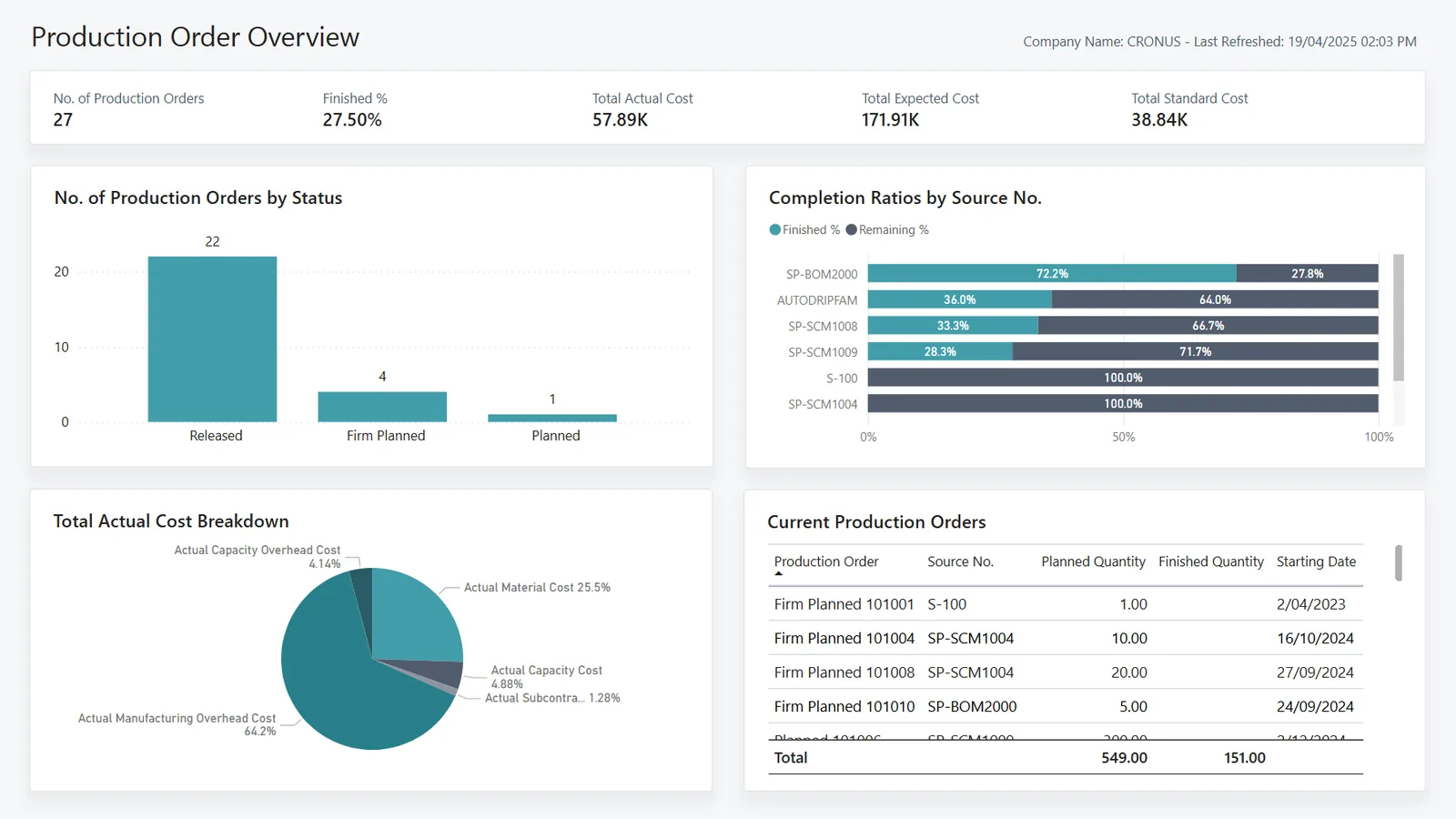
Production managers need a daily picture by style and size, not a monthly profit report.
There is no single best answer. The right platform depends on volume, how much work you subcontract and how much custom logic you need.
| Company profile | Often a good fit | Why | Watch out for |
|---|---|---|---|
| Small abaya or tailoring atelier with a retail counter | Zoho (Books, Inventory, POS-style add-ons) or Odoo | Simple variant stock, invoicing and VAT with a low admin burden | Zoho has no native production module; job steps may need Zoho Creator |
| Uniform maker with contract call-offs and in-house lines | Odoo (Manufacturing, Purchase, Sales) | Product variants, BOMs, work orders and subcontracting in one database | Size-specific consumption and bundle tracking usually need configuration or a small extension |
| Export-focused producer with heavy CMT subcontracting | ERPNext | Item variants, subcontracting orders and job cards on an open-source base you can extend | Needs a disciplined partner to keep customizations upgrade-safe |
| Multi-entity group with a factory and regional sales companies | Dynamics 365 Business Central | Strong multi-company finance, intercompany and Microsoft 365 integration | Manufacturing depth depends on licence edition; confirm with current Microsoft licensing |
We implement Zoho, Odoo, ERPNext, Dynamics 365 and custom ERP. Fit depends on your process, not our preference.
Garment makers face the same tax rules as any UAE business, plus a few points specific to contract work and exports. Confirm the treatment of your transactions with your tax advisor.
Local uniform contracts are usually standard-rated at 5%, while qualifying exports may be zero-rated if export evidence is kept. The ERP should tag each invoice with the right tax code and store shipping documents against it.
Corporate tax applies at 0% up to AED 375,000 of taxable income and 9% above. Producers licensed in a free zone should check whether they meet the Qualifying Free Zone Person conditions and keep qualifying and non-qualifying income separable in the ledger.
The UAE is moving to Peppol-based e-invoicing using the PINT AE specification through Accredited Service Providers, with mandatory phases from 2027 depending on revenue. Clean customer master data with TRNs makes this much easier. Check the latest Ministry of Finance and FTA guidance.
Operators, cutters and supervisors must be paid through the Wage Protection System using a Salary Information File. Piece-rate earnings need to roll into the monthly salary before the SIF is generated.
General information, not tax or legal advice. Rules change; confirm current FTA, MOHRE and Ministry of Finance guidance with your advisor.
We do not promise percentages. These are the practical improvements garment clients typically look for.
Anyone can see how many pieces of each size are cut, in stitching or packed, without walking the floor.
Actual fabric, trims, labour and CMT charges are compared with the costing sheet once an order closes.
Every piece sent to a CMT unit is accounted for when it returns, including rejects and leftover material.
Capacity and material shortages show up when orders are confirmed, not the week before delivery.
Durations are typical ranges for a single-factory producer and vary with scope and data quality.
Durations are typical ranges; your plan is agreed after discovery.
We follow an order from tech pack to carton, including CMT movements, and agree the size and colour structure.
Variant attributes, style templates, BOMs and routings are configured and tested with a few real styles.
Customers, suppliers, fabric rolls, trims and opening balances are cleaned and loaded.
One line or one customer's orders run through the system end to end before wider rollout.
Full rollout with hypercare, then support plans for new seasons and new customers.
Explore platform, module and sector pages that connect to garment production.
We configure the system for the rules UAE businesses report against, and test it before go-live.
General information, not tax or legal advice. Confirm current requirements with the FTA, MOHRE or your advisor. See all UAE compliance guides.
On-site workshops in Dubai, Abu Dhabi and Sharjah, and remote or on-site delivery across the Northern Emirates and free zones.
Official sources and references
Facts on this page were checked against these sources in October 2026. Rules change, so confirm current requirements before acting.
Still have a question? Our consultants are happy to help.
Ask an ExpertYes. Odoo, ERPNext and Business Central all support a parent style with variants generated from attributes such as size and colour. Each variant still has its own stock and barcode, but you maintain the style once.
We use the platform's subcontracting or job-work feature to issue panels and trims against a subcontract order. When finished garments return, the system receives them, consumes the issued material and shows any balance still at the subcontractor.
Not always. Smaller units often record output per lot and stage. Larger factories that pay piece rates or want operator-level tracking may benefit from bundle-level barcodes, which usually require some configuration or a light extension.
Yes. We set up the contract with an agreed price list and record size lists per branch or employee group, then create scheduled deliveries and invoices against it so you can see what has shipped and what is outstanding.
Often it can. Odoo and Zoho, for example, offer point-of-sale options that share stock with production. We check whether your shop volume and workflow suit the same database before recommending it.
Related Solutions
Related Industries
Related ERP Platforms
Send us one real order with its size breakdown and we will show how it would flow through the system.
Dubai, United Arab Emirates