L
O
A
D
I
N
G


Zoho, Odoo, ERPNext, Dynamics 365 and custom ERP, delivered by one accountable team.

Your EMR runs the clinical side. We set up the ERP that turns consultations, procedures and insurer remittances into clean department-level numbers for a UAE medical center.
A UAE medical centre keeps its EMR for appointments, clinical notes, coding and claims, and uses an ERP behind it for finance, procurement and HR. The ERP posts daily revenue by department and payer, matches insurer remittances by claim ID, tracks rejections, controls consumables and drug stock, calculates doctor revenue share and runs WPS payroll. Zoho, Odoo, ERPNext or Dynamics 365 can be used.
ERP for medical centers in the UAE is a different job from clinic software. A multi-specialty center in Al Barsha, Khalifa City or Al Nahda typically runs general practice, several specialties, a physiotherapy room, radiology or ultrasound, a sample collection point and often an in-house pharmacy, all under one license and one finance team. Each of those departments earns, spends and gets paid by insurers differently, and the owners want to know which ones carry the center.
The EMR or practice management system handles appointments, clinical notes, coding and claim submission. The ERP sits behind it and does the work finance, procurement and HR depend on: posting daily revenue by department and payer, matching insurer remittance advice against what was billed, tracking rejected amounts, controlling consumables and drugs, paying doctors their revenue share and running WPS payroll for licensed and support staff.
We implement this back office on Zoho, Odoo, ERPNext, Microsoft Dynamics 365 or a custom build, and we connect it to the EMR you already use rather than replacing it. If you run a single-doctor practice, our ERP for clinics page is the better starting point.

These problems show up in nearly every growing medical center we talk to, regardless of emirate or specialty mix.
Insurers pay weeks later, often short, with rejection codes buried in remittance files. Without line-level matching, write-offs are guessed at year end instead of managed every month.
Revenue may be split by specialty in the EMR, but salaries, rent, consumables and equipment depreciation sit in one pool in accounting. Nobody can say with confidence whether radiology or dermatology is profitable.
Revenue share agreements vary by doctor, by payer and sometimes by procedure. Calculating them manually from EMR exports is slow and invites disputes.
Dressings, syringes, contrast media and injectables are issued from a central store with little link to the procedures that used them, so cost per procedure is unknown.
Practitioner licenses from DHA, DoH or MOHAP, malpractice cover and equipment certificates all expire on different dates. A lapse can stop a doctor from seeing patients.
We map the ERP to the patient visit as it happens in your center, so finance sees each step without re-keying.
One shared database: every step updates stock, finance and reports in real time.
Not every module is needed on day one. These are the ones that pay back fastest for a multi-department center.
Every revenue and cost line tagged to a department, branch and payer so the P&L can be cut any way management asks.
One customer account per insurer or TPA, with claim batches, remittance imports and an aging that separates pending, paid, rejected and resubmitted.
Rules per doctor for percentage of collected or billed revenue, fixed plus variable, and payer-specific exclusions.
Batch and expiry control for drugs and consumables, with issue to department or directly to a procedure.
Approved supplier lists, purchase requests from department heads and price comparisons for recurring consumables.
Practitioner license numbers, expiry alerts, visa and Emirates ID dates, and duty rosters in one employee record.
Salary, allowances, overtime and end-of-service gratuity with SIF generation for your WPS agent or bank.
Depreciation for scanners and chairs plus preventive maintenance and calibration schedules for biomedical equipment.
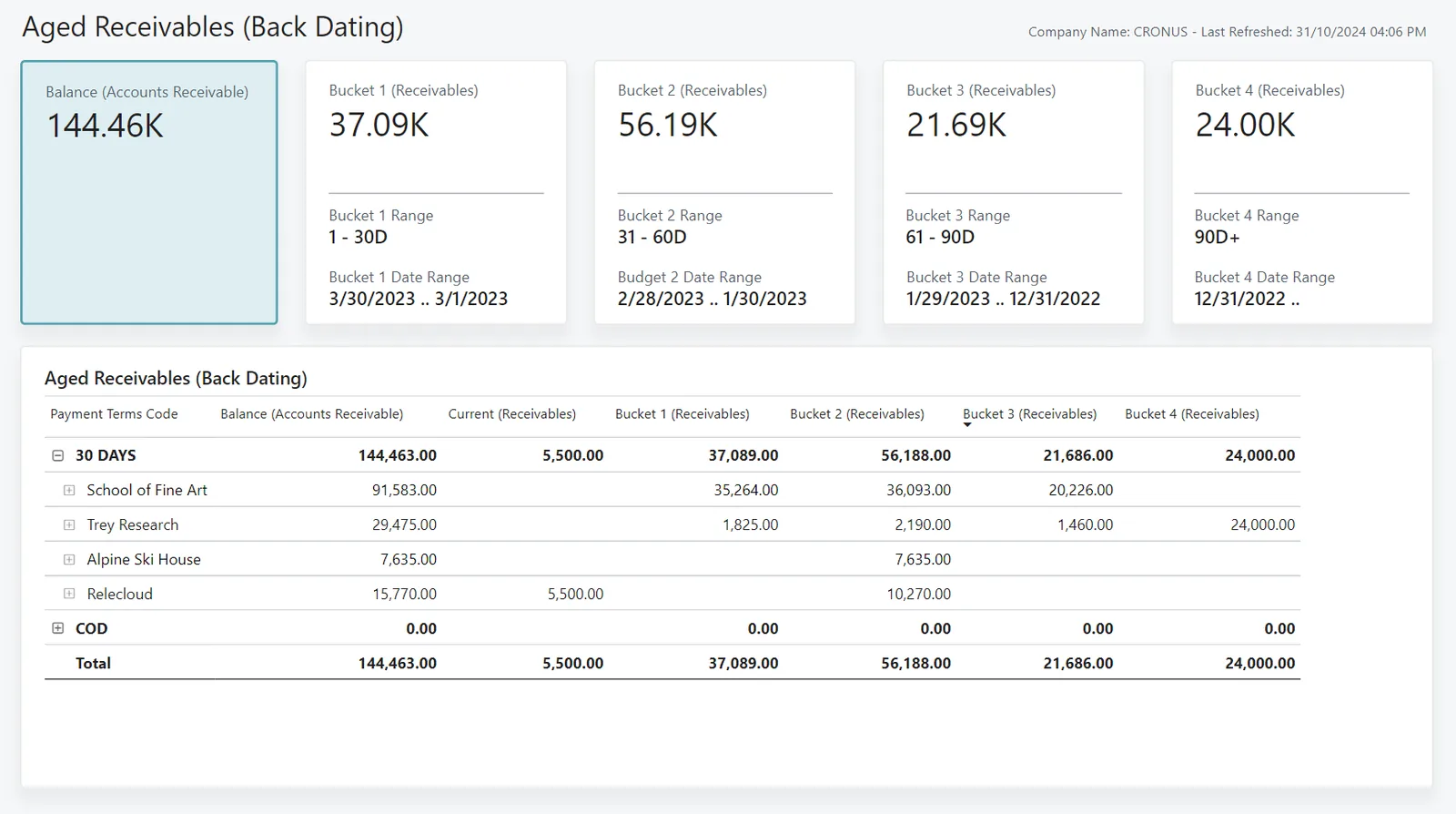
A single dashboard drawn from EMR postings and ERP transactions, filtered by branch, department or insurer.
The right platform depends more on your group structure and IT preferences than on medical features, because the clinical work stays in the EMR.
| Medical center profile | Platform that usually fits | Why it fits | Watch-out |
|---|---|---|---|
| Single-site center with a mature EMR | Zoho Books with Zoho People and Analytics | Quick to set up, good VAT invoicing and reporting, low admin overhead | Revenue share logic usually needs Zoho Creator or Deluge scripts |
| Center with an in-house pharmacy and busy store | Odoo | Strong inventory with lots and expiry, purchase, accounting and HR in one database | Keep the pharmacy POS scope clear so it does not overlap the EMR billing |
| Group that wants to own and host its code | ERPNext | Open source, accounting dimensions and a healthcare app that can be extended | Needs a partner or in-house team for hosting and upgrades |
| Multi-branch group with Microsoft 365 and external auditors | Dynamics 365 Business Central | Multi-company consolidation, Power BI and familiar Microsoft security | Licensing and partner effort are higher than lighter options |
| Center with unusual contracts or bundled packages | Custom ERP or Zoho Creator extension | Models package pricing, corporate contracts and complex doctor deals exactly | Requires a clear specification and ongoing ownership |
We implement Zoho, Odoo, ERPNext, Dynamics 365 and custom ERP. We do not replace or resell EMR systems; we integrate with them.
These are the regulatory areas we configure the ERP to support. Confirm tax treatment with your tax advisor and data rules with your legal team.
Qualifying preventive and treatment healthcare services are generally zero-rated, while elective cosmetic services and many retail items are standard-rated at 5%. The ERP needs separate tax codes per service type so the VAT return is mapped correctly.
Federal Law No. 2 of 2019 on ICT in health fields generally requires health data to be stored in the UAE, with exceptions set by regulation. We keep clinical data in the EMR and limit the ERP to the identifiers finance needs, and we plan hosting accordingly.
Invoices to insurers, TPAs and corporate clients are business transactions, so they fall into the planned e-invoicing scope using PINT AE through an Accredited Service Provider. Check the latest Ministry of Finance and FTA guidance on dates for your revenue band.
Doctors, nurses and support staff on UAE payroll are paid through WPS with a Salary Information File, and gratuity accrues under Federal Decree-Law No. 33 of 2021.
Department and branch dimensions make it easier to prepare corporate tax workings under Federal Decree-Law No. 47 of 2022, including related-party charges between group entities.
General information, not tax or legal advice. Rules change; confirm current FTA, MOHRE and Ministry of Finance guidance with your advisor.
These are the outcomes medical centers typically aim for. Actual results depend on data quality and adoption.
Every insurer payment is matched to claims, so finance can show exactly what was rejected, why, and what is being resubmitted.
Owners can decide whether to expand, reprice or close a service using a full department P&L, not revenue alone.
Revenue share statements are generated from the same data the doctor can see in the EMR, with the rule applied shown line by line.
Issuing stock to departments and procedures exposes over-use and expiry losses that were invisible before.
Durations are indicative ranges and depend on the number of branches, the EMR interface and the state of your historical data.
Durations are typical ranges; your plan is agreed after discovery.
Review payer contracts, revenue share agreements, department structure and the EMR export or API options.
Agree chart of accounts, dimensions, tax codes, remittance matching rules and approval flows.
Configure modules, build the EMR posting interface and remittance import, and set up payroll and WPS.
Run one month in both old and new processes and reconcile insurer balances and doctor payouts.
Switch over at a month start, then tune reports and rules during the first quarter.
Explore pages for other healthcare businesses and the platforms we implement.
We configure the system for the rules UAE businesses report against, and test it before go-live.
General information, not tax or legal advice. Confirm current requirements with the FTA, MOHRE or your advisor. See all UAE compliance guides.
On-site workshops in Dubai, Abu Dhabi and Sharjah, and remote or on-site delivery across the Northern Emirates and free zones.
Official sources and references
Facts on this page were checked against these sources in October 2026. Rules change, so confirm current requirements before acting.
Still have a question? Our consultants are happy to help.
Ask an ExpertNo. The EMR remains the system for appointments, clinical records, coding and claim submission. The ERP receives billing and remittance data from it and handles accounting, stock, HR, payroll and reporting.
In most projects, yes. We import remittance data exported from the EMR or claims platform and match it to the original claims by claim ID, so paid, partially paid and rejected amounts post automatically to the insurer account.
We set up rules per doctor, for example a percentage of collected revenue excluding certain payers or procedures. The system produces a monthly statement and a payable or payroll entry, so the calculation is repeatable and auditable.
Usually not. Branches are modeled as dimensions or as separate companies if they hold separate licenses or trade licenses. We decide this during design based on how you report and how you file VAT.
Yes. License numbers and expiry dates are stored on the employee record and the system sends reminders to HR and the medical director ahead of the renewal window.
A single-site center with a clean EMR export often goes live in 8-12 weeks. Multi-branch groups or projects needing a custom EMR interface take longer, and we agree a phased plan up front.
Related Solutions
Related Industries
Related ERP Platforms
Call +971 55 145 3265 or email contact@uaeerpexperts.com and we will review your EMR, payer mix and reporting needs with you.
Dubai, United Arab Emirates